Showing posts with label Education. Show all posts

Monday, May 22, 2017

Review: PARTICLES OF FAITH


by Stacy A. Trasancos


A scientist is drawn to the Catholic faith as a result of the deepening of scientific insight? This book details the faith journey of a modern scientist involved in the latest nano technology research. Her deepening scientific insights derived during research lead her to a deeper faith. Such a story, similar to Augustine of Hippo 17 centuries ago, is happening even among scientists today. It is a story not often told in our popular modern media. This books tells the story of a scientist seeking truth being led to a deep and genuine faith. Then she adds to that story to persuade us that faith and science are culturally linked, mutually beneficial and interconnected approaches to truth that together raise the dignity and value of human life.

Any person, trained in science or untrained in science, can read this book and be brought to the realization that the often repeated mantra (in popular media) that science is in opposition to faith is patently untrue.   There are real scientists (like the author of this book) who come to see that Christian faith and science as truly complimentary pursuits of the truth.  The often assumed popular media assumption that scientists are always led away from religious faith as their expertise in science increases is debunked.

Dr. Trasancos begins with a chronicle of her personal experience.  First she moves away from the Christianity as she was raised with as she reaches young adulthood, then her abandonment of her faith by the start of her doctoral studies and then her religious awakening as a research chemist.   She comes to recognize Catholicism is fully compatible with science.  Her awe and logic reminds one of similar arguments posed by Augustine of Hippo 18 centuries earlier.  She comes to recognize that her God is pleased with the scientist's pursuit of truth.  She also shares at the end of the book how science can be wrongly used (in the absence of faith) to demean human life.Following the personal experience the book goes on to describe a variety of science principles along the way.  She reviews the basics of chemistry.  Dr. Trasancos reconciles the scientific origin of man with the Judaeo-Christian biblical account of Adam and Eve.  She addresses the always difficult issue (for some) of human evolution.  She ponders quantum mechanics and free will.  She reasons about Big Bang as proof of a God.  Finally she also addresses the controversial question of when does human life begin and how science is needs a fuller understanding to answer that question.

This is a fabulous reference with chapters that neatly segmented, details in an organized way how scientific pursuits can lead to genuine faith and how faith can deepen the understanding of our purpose and why both faith and science lead us to a fuller understanding of truth.

======================

Quotes of Interest:

"What I have to say i snot profound, it is rather simple.  It is a plea to fellow Catholics to return to the child like awe and wonder with an unwavering confidence in Christ and his Church when we approach the subject of modern science."
                                                                                                                                   pg 3
     Einstein wrote "in this materialistic age of ours the serious scientific workers are the only profoundly religious people."
                                                                                                                                   pg 12
     "...what so much of the discourse about faith and science omits is that conducting scientific research does not instill in a person the broad knowledge traditionally associated with intellectuals.  The work is more like grunt work at times.  The intellectual aspect is brief and takes a budding scientist from broadly absorbing scientific literature in a specific area of research into narrower and narrower, exceedingly specialized scientific method cycles to hypothesize and test exceedingly specialized scientific method cycles. "
                                                                                                                                   pg 23
      "Scientism  is the belief that only knowledge obtained from scientific  research is valid, and beliefs deriving from religion should be discounted.  It is an extreme or escessive faith in science or scientists."
                                                                                                                                   pg 36
     "The idea hat faith is separated from, or subject to, reason has arisen relatively recently, due mostly to the fast advance of science and to the exaggerated rationalism of certain thinkers."
                                                                                                                                   pg 41
     "But for Christians science is a way of knowing God better through the study of his handiwork.  Our faith can light the entire discussion.  I have seen both sides, and this is may main message in this book.  We have to tell people what science is in the bigger system of reality."
                                                                                                                                   pg 42
     "We need faith and reason equally, but when it comes to science, we must view the universe through a confident lens of faith in the Creator."
                                                                                                                                   pg 43
     "A believer views creation as the handiwork of God, all of it in consistently interacting, as an act of faith."
                                                                                                                                   pg 73
 "Models are used in science to probe the unknown, and mental pictures fill in the rest of the realms we cannot see directly.  The models and mental pictures continually need to be updated with the acquisition of new data.  Models are like scaffolding that go up before walls, rooms and decor are built around them, necessary frameworks for gaining new knowledge. "
                                                                                                                                   pg 93
 "Catholics are both-and people.  We can hold that God created an ordered universe down to the smallest particle, and we can also hold that He created rational creatures with free will."
                                                                                                                                   pg 100
 "if students are not prepared to understand science in the light of faith, they will be left in confusion.....if we leave the question of our existence at materialism's door, we shut out any deeper meaning or purpose."
                                                                                                                                    pg 1o7
  "In the light of faith, I can look into the chasm and not fear it.  I can see that it is too vast fro me or for any other human to ever discover all its mysteries, but I can appreciate that discovering a little more truth is better than not even trying."
                                                                                                                                   pg 118
  "We place ourselves, as any good scientist ought to, as observers seeking to understand (literally 'to stand under') the truth that life exists one it exists.  We are observers, not dictators commanding fantasies.  The proclamation that life begins at conception is a tautological statement.  That truth belongs to anyone who will accept it.  As Mother Mary taught us, life is a fiat."
                                                                                                                                   pg 162
  "When we say life begins at conception, we uphold the simplest unity of faith and science."
                                                                                                                                   pg 166

Sunday, March 12, 2017

Review: THE ESSENTIAL GALILEO


THE ESSENTIAL GALILEO
Edited and Translated by
Maurice A Finocchiaro

       This book is a collection of some of the most important writings of Galileo.  The decision of "what was most important" was made based on consultation with scholars familiar with Galileo from around the world (and listed in the introduction of the book).  An excellent introduction is followed by a "Chronology of Galileo's Career and Aftermath" which is a listing of dates important to the life and story of Galileo.
       Any person who is interested in the science that Galileo came to understand should read this as a synopsis of his most perceptive writings in this book.  This book can also help anyone who wishes to understand the famous court proceedings through the words of Galileo himself.   One will find that Galileo understood much more science than most of his peers but also misunderstood natural events (such as tides) as well.  In addition, as John Paul II recognized, Galileo was also ahead of his time in understanding how to read sacred scripture.  Galileo also appears to have differentiated the methods used in scientific analysis from theological analysis.
       The Introduction  (pg 1-16) is a a fabulous summary of the life of Galileo.  It frames the activities and context of his life precisely.  In addition to the chronology the index of the book allows for quick access to the many topics and thoughts that Galileo investigated and pondered.   I found this chronology useful (referred to it often during reading).  The Chapters each provide translations of key Galileo writings in temporal order including his excerpts from his published works and private communications.
       Reading his words reveals that Galileo was certainly a scientist with amazing insight and confidence but also a skilled, even great writer.
       Galileo's writings speak for themselves well in this collection.

=======================

Interesting Quotes of General Interest:

Introduction
     "His [Galileo's] contributions to scientific knowledge were so radical that he constantly had to discuss with his opponents (scientific as well as ecclesiastic) not only what the facts were and what their best theoretical interpretation was, but also what the proper rules for establishing the facts and for interpreting them were."
                                                                                                                                   pg 2
     "His [Galileo's] orientation was critical of Aristotelian physics and was fundamentally Archimedean; that is he followed Archimedes' mathematical approach, accepted his physical principles of statics, and tried to build upon them for the analysis of how bodies move.  In his study of falling bodies, Galileo became and ingenious, skillful and indefatigable experimenter who pioneered experimentation as a procedure involving the combination of empirical observation with both mathematization and conceptual theorizing." 
                                                                                                                                     pg 4
Summary of Arguments against Copernican System that Galileo was "acutely aware" of:
      "The earth's motion seemed epistemologically absurd because it contradicted direct sense experience.  It seemed astronomically false becasue it had consequences that could not be observed, such as similarity between terrestrial and heavenly bodies, Venus phases, and annual stellar parallax.  It seemed mechanically impossible because the available laws of motion implied that bodies on a rotating earth would, for example, follow a slanted rather than vertical free fall, and would be thrown off by centrifugal force.  And it seemed theologically heretical because it contradicted the literal meaning and the traditional interpretation of the passages in the Bible.  Until 1609 Galileo apparently judged that the anti-Copernican arguments far outweighed the pro-Copernican ones.  Thus we find him teaching geostatic astronomy in his courses and reacting in a lukewarm and evasive manner when an enthusiastic Copernican life Johannes Kepler tried to engage him."
                                                                                                                                     pg 4-5
From "History and Demonstrations Concerning Sunspots" (1613)
Knowing properties vs. Knowing Essenses
     "I am opposing Aristotles's doctrine much less than those who would want to claim it inalterable.  For I am sure that he never regarded the conclusion of inalterability as certain as the principle that plane sense experience must have priority over any human theory.  Thus, one will philosophize better by giving assent to conclusions dependent on clear observations than by persisting in opinions that are repugnant to the senses and are confirmed only with probable or apparent reasons."
                                                                                                                                     pg 100
     "These [knowledge of sunspots] enable us to philosophize better about other more controversial questions regarding natural substances.  Finally lifting us to the final purpose of our efforts, namely the love of the Divine Architect, they can sustain our hope of learning all other truths from Him, source of light and truth."
                                                                                                                                   pg 102
Letter to Castelli (1613)
     “I should believe that it would be prudent not to allow anyone to oblige [284] scriptural passages to have to maintain the truth of any physical conclusions whose contrary could EVER be shown to us by the senses and demonstrative and necessary reasons. Who wants to fix a limit to the human mind? Who wants to assert that everything which is knowable in the world is already known?"
                                                                                                                                    pg 105
Letter to the Grand Dutchess Christina (1615)
     "...I think that in the course of examining Scripture one may find more appropriate passages whereby we would be entitled, if not to prove something for certain, at least to believe something on this topic based on the words of sacred authority....[citing St. Augustine].."Now then, always practicing a pious and serious moderation, we ought not to believe anything lightly about an obscure subject, lest we reject (out of love for our error) something which may be truly shown not to be in any way contrary to the holy books of either the Old or New Testament."
                                                                                                                                       pg 110                 
     "It is most pious to say and most prudent to take for granted that Holy Scripture can never lie, as long as its true meaning has been grasped; but I do think on can deny that this is frequently recondite and very different from what appears to be the literal meaning of the words.
                                                                                                                                   pg 115
     "Therefore, I think that in disputes about natural phenomena one must begin not with authority of scriptural passages, but with sense experiences and necessary demonstrations.  For the Holy Scripture and nature derive equally from the Godhead, the former as the dictation of the Holy Spirit and the latter as the most obedient executrix of God's orders....."

     "God reveals Himself no less exceptionally in the effects of nature than in the sacred words of Scripture"
                                                                                                                                    pg 116           
Galileo's Consideration on the Copernican Opinion (1615)
     "Moreover, we admit that a physical proposition which has been proved true by physical and mathematical demonstrations can never contradict scripture, but that in such a case it is the weakness of our mind which prevents us from grasping its [Scriptures] true meaning."
                                                                                                                                     pg 161
From Dialogue on the Two Chief World Systems (1632)
     "I applaud his (Aristotle) being examined and diligently studied and only blame submitting him in such a way that one blindly subscribes to all his assertions and accepts them as unquestionable dictates, without searching for (other) the reasons for them."
                                                                                                                                     pg 201

Saturday, November 1, 2014

My Child Remembers....

     The picture above is actually one of four beautiful waterfalls in the nation of Havasupai (located west of the Grand Canyon National Park).  That water fall is called Havasu Falls.  The essay below was written (to complete a school assignment) by my daughter as her memory of one of the most dangerous and spectacular of hikes!  I provide photos I took of that particular hike after descending and catching up with her (my wife and younger child stayed at the top).
==============================

What Goes Up Comes Down
Part A
     The Arizona sun beamed on us as my cousin and I hiked down the Havasupai Mooney Falls Trail. Being in a different country considered to be apart from the United States, Havasupai was a world foreign to me and my family. I was eight years old. At twenty, my cousin Adam was strong and independent; he was larger than life to me. I knew this hike would be worth the unprepared day.  Our clacking hiking boots echoed as we passed through some cool tunnels, and I breathed a contented sigh.  Thinking of the hike to Havasupai Indian Reservation, my pride made me a sincere conclusion that nothing dangerous could be ahead, or could it?
      Hiking Mooney Falls would be a breeze in the park compared to hiking to the Reservation. So far, so good, I thought. Maybe this isn't so treacherous after all. The end of the last tunnel, however, there was a shocking reality. 
     Before us stood the steepest hiking trail I ever saw; chains and rocks looming ahead as our guides. “I don't think I can do it,” my voice pleadingly spoke. “Come on,” Adam said, “I got you; you got this. His words did not give me ease. Looking down the cliff, I knew better than to give into something I was pressed to do by my influencing cousin, but it seemed to me I had no other choice, What could go wrong if he thought everything would be fine? I quickly gave in. Pulling myself forward gradually, my hand was consistently reaching for the next secure stone.  My heart beat faster, my body was shaking, and I felt like I would melt into the Canyon wall.  The one natural element that gave me consolation was the cold mist traveling upwards from Mooney Falls.  I could taste the fresh, crisp water from the blue and crystal Havasupai waters.  The sound of the falling water grew more powerful.
    Time was ticking and the pressure was mounting. A line of tourists formed behind me, and I was embarrassed at my lack of speed in the endeavor. My eight year old mind remembered what I had said earlier that day, Maybe we should go.  I had looked longingly at Adam for approval, but now it was too late. 
     My cousin tried to encourage me; I knew he was loving the hike, but my eyes kept being drawn down to the edge of the cliff that seemed so impossible to scale down. The despair of being abandoned to this danger made me wish I could disappear in the moment. "Look behind you!" Adam exclaimed in his most motivating tone. Turning my head, to my great relief, I saw my dad. From then on, the load that I carried within got lighter. Leading to the ending point, my steps were steady on the downward, slippery wooden ladder. At last, my feet touched the pink, rocky shore. Am I really at Mooney Falls? My eyes gazed in wonder. The scene of the waterfall was breathtaking and the same cool mist coated my hot sunburned skin. 
      I turned around to look up at the trail. The memory of having to go back clouded my mind, but a woman from the line of hikers saw my fear.   "Don't worry, she said smiling, it's much easier going up than down!" Those words encouraged me to continue the unfinished journey.  My dad smiled at me, "How did you do it?" he said in his inquisitive teacher voice, reminding me of the times he asked his physics students how they got first place in his competitions. "I just did" I answered and he laughed at my bland response. "I met a Native Havasupai man while you were hiking with Adam" my dad said.  "I asked him about Mooney Falls and wanted to know if someone your age could go down".  The native responded ˜We only allow our sons twelve and older to hike that trail".   A miner named Mooney who fell off the trail in 1882 made the Havasupai cautious in the descent. I darted to catch up to you, but then I saw a little figure climbing down the trail and I knew it was you!"

Part B
     The words of the woman who told me, "It's easier going up than down!" lifted my spirits and made me realize hiking Mooney Falls was worth the challenge. During the exhaustion of trying to accomplish it, I did not realize the purpose of what I was working to accomplish. I am seeing now that this is also true in real life situations that are complex and maybe hard for people to understand the meaning of. Even if the purpose is not seen but true wisdom is gained from the experience, the event has meaning for life. The person has not only simply followed the "plot" of a story, so called, but hopefully the mistaken event has transformed them.  In the hiking process, I was mentally exhausted, physically drained, and felt like the heat might make me collapse any minute. The only thing I had on my mind was to get it over with and stop having people breathing over me to get me going. I knew that I could not have done it alone hiking to Mooney, but I also knew that if I had not decide d to persevere myself, I would not have finished the hike.
     
     I realized that the journey to Mooney Falls was just as harmful as what I had assumed in the beginning, but now that it was over, I found myself enjoying the dream of reality. I was happy to have accomplished the hike despite the difficulty, and I was satisfied to have my dad present with me.  My feelings during the hike made it seem like no one would be there to help me through besides Adam.  When my cousin told me something was behind me, I was expecting another impatient tourist wanting to pass me up because I was taking up too much time and room. My dad surprised me when he came. It felt good not to be treated as just another slow tourist hiker. His hands were those of a father. He wanted me to take time and he wanted me to be safe. He did not abandon me, even if in the back of my mind I thought he did. Enjoying Mooney Falls, it was a significant knowledge for me as a child to see my dad smile at me as a proud father. I was very shy as an eight year old, and though I pretended my dad's admiration did not really make a difference, I was happy inside because it did.

     One point, however, did weigh hard on me during the hike: I thought it was going to be easy.  Such an assumption was not primary but it was still there. I didn't want to think about the physical manifestations of danger in front of me, it made it easier to dwell on what was easiest for me. As a Christian, the decisions I made helped me see God being actively part of what I experienced. I thought of the scripture in which Simon Peter speaks to Jesus of Nazareth. Peter does not want to think about his leader or himself falling into what seems to be the failure of having to suffer. "God forbid, Lord!" he said "No such thing shall ever happen to you!" In my thoughts I was saying almost the exact words  Peter said: No such thing shall ever happen to me. Jesus replies rebuking Peter, and saying,  "You are thinking not as God does but as human beings do."  I realized that wanting to rid myself of the hardship made the journey less significant than if at the pressing moment I gave myself up to the adventure of trusting.
.


Wednesday, October 29, 2014

Family survives without government aid!

      In the picture above a family arrives at the rim of the Grand Canyon.  They have survived 5 days and 4 nights in the wilderness without government oversight, supervision, campaign adds, cell phone signals or taxes.   How did they survive?  
          
    What if the power of the government could actually be used to free people from despair?  What if legislation actually could eradicate poverty?  What if the government had the power to change the hearts and minds of people and give them a reason to live fully and bountifully?  Then the big government party would need to stop those initiatives BECAUSE it would reduce the dependency the big government party needs!
    We in fact have a dysfunctional government run by a big government party that NEEDS a dependent class to be elected.  That means we have a government that requires people to be unemployed and discouraged and for small businesses to be squashed (those small business owners are, after all, TEA party types and must be harassed).  A big government party has a vested interest in having people homeless, in despair and dependent on government.  The big party government, with wonderfully stated intentions, secures the loyalty of the individual to the government while ALSO creating the conditions needed for dependency and despair!
     The result of one party big government is non-participating and discouraged workers, rampant unemployment, suppressed businesses, depression and suicide.  Those who decide to live know they need the government.  
    More dependency and more blame! That is the answer?
    It takes real courage to be a truth speaker to those in power.  There are questions that are very uncomfortable for those who vote for the big government party with the honorable intentions of "helping the poor".   In this video Mr. Guillary bravely shares the realization that 40 years of big government party control over the area he has lived in actually seems to have made things worse!  Only genuine courage can ask questions that make those in power uncomfortable.  This man is truly courageous.


Wow.  Possibly we will have an awakening of those being used to empower the big government-business party!  The exasperation in the video below understands the link between a vibrant economy healthy communities and families.


     The problems of poverty are actually much deeper than a material deficiency.  The problem of poverty is not, alone, defeated by providing all material needs for some temporary time period.  There is the heart and spirit of the human that must be addressed.  Government is unable to address anything of depth.  Pray for the courageous who daily make decisions to put off the pleasures of now for the good of eternity!


You may be interested in some commentaries below:
  Blame Republicans because it works!
  Does our big government truly help families?
  Perpetuating Poverty with the Wrong Solution
  Is our big government a wonderful healthcare provider?
  Why does healthcare matter to those who want freedom?
  Does forcing employers to pay a certain minimum wage help?
  How a government truly can enrich everyone! 


Wednesday, October 22, 2014

Escaping Poverty? It can (and does) happen!

This was such a unique article I decided to share it. First though let me provide some personal information about my family and myself:

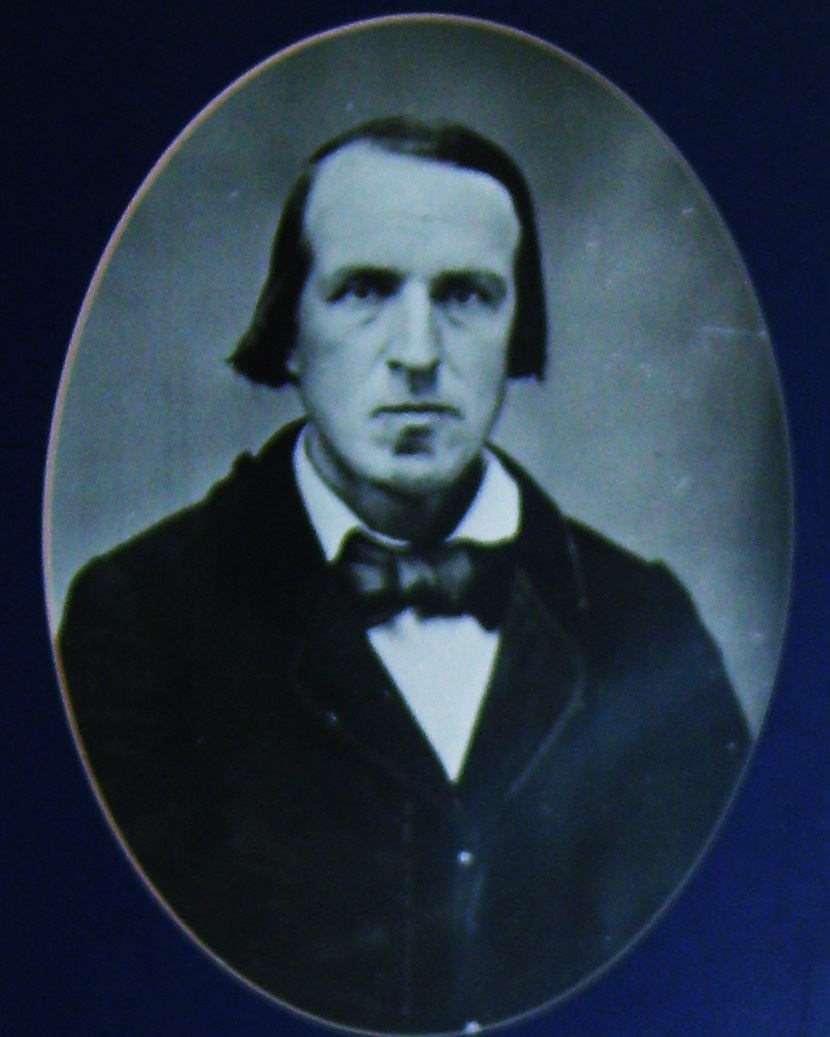
.....My Great great grandfather was Mathew Fitzgerald (in the picture above). Family lore says that he was an abolitionist who willingly reenlisted with the Union in 1864 after returning home for visit his family and 4 children (this picture was taken during that visit). He was adamantly against the "scourge of slavery" and wanted to help end the war that he thought would end slavery. He was a "Lincoln Republican",and died in a confederate prison camp a year after the photo was taken (using an advanced scientific invention....the pinhole camera).
.....Below is a picture of myself and future wife as I prepared to travel from our home in Connecticut to a new home in South Carolina. The article below proposes evidence that supports how poverty persists and how it is eradicated. The article asserts and supplies evidence for the assertion that a better life can be the result of a willingness to pick up stakes and move.  It also cites how certain localities generate more "escapees" from poverty that others. 


.....The article below actually discusses what has been observed to work in eradicating poverty as well as detailing what has not worked. The examination of factors that appear to lead people out of poverty should be, I think, very carefully studied.  This suggests additional studies, that in my mind, should include what is going on in the schools that serve these regions!....I found this article thought provoking:

==============================================================
Consigned to ‘Assistance’ 
From the September 22, 2014, issue of National Review 
By J. D. Vance
     It’s sometimes easy to forget that the Republican party’s proudest moment was the emancipation of the American slave. Indeed, for decades after Lincoln gave his life for the Union, black America voted overwhelmingly Republican. But after FDR brought promises of help to the needy and Goldwater fought the 1964 Civil Rights Act (for what Martin Luther King Jr. called non-racist but still-foolish reasons), the party never recovered its standing with black voters.

     The irony is that as blacks drifted farther from the Republican party, a similar group became its base. Appalachian whites suffer from many of the same social ills as working-class blacks: broken families, substance abuse, poor health, and high poverty. The two groups differ in important ways, but the past 80 years of Appalachian history nonetheless offer lessons about how modern public policy can assist black Americans. Early anti-poverty efforts focused largely on the white population. In an era of “colored” drinking fountains and separate schools, federal aid was as segregated as a southern lunch counter. Social Security excluded agricultural and domestic laborers at a time when most African Americans worked in those professions. Many dark-skinned members of the Greatest Generation never enjoyed the fruits of the GI Bill because of racial discrimination by colleges. It was, as Ira Katznelson argued in an explosive book, a type of affirmative action — for white people.Katznelson’s arguments, though hardly new, have recently gained traction. The idea of paying reparations for slavery has reentered the national debate, and there’s a growing fear, to borrow the words of The Atlantic’s Ta-Nehisi Coates, that “the effects of a social safety net engineered for the aid of some and the hindering of others is [sic] still with us.” To fix the problem, some say, society need merely invert the racist policies of the past. Implement a “domestic Marshall Plan” for black America, says Chicago radio host Salim Muwakkil.
       No one doubts the injustice of Jim Crow. But before foisting a more robust social safety net “engineered for the aid of some” on black Americans, it’s worth assessing whether we missed the mark on the first go-round. And if we failed, we should figure out why.
     In 1965, Lyndon Baines Johnson extended the social safety net to all populations. Yet despite racially neutral intent, a heavy emphasis on rural whites persisted. Two federally chartered organizations — the Depression-era Tennessee Valley Authority (TVA) and Johnson’s Appalachian Regional Commission (ARC) — pumped millions of development dollars into predominantly white rural locales. There was no corollary in black America — no Urban Aid Commission to flood inner cities with aid. Appalachia’s closest economic and cultural cousin is the Mississippi Delta region, a veritable Appalachia for blacks. Yet the Delta Regional Authority, explicitly modeled after the ARC, spent its first dollar in 2000 — 35 years after LBJ made Appalachia the focus of the War on Poverty.
       The aid came not just in the form of direct welfare payments, but also as government jobs. The country-music anthem “Song of the South” tells a familiar tale: “Papa got a job with the TVA; we bought a washing machine and then a Chevrolet.” Thanks to the TVA, thousands of America’s rural white poor obtained high-wage government jobs. And the industrial infrastructure they built still dots the landscape: beautiful lakes birthed by hydroelectric projects and three-lane highways constructed with federal dollars. But there are now precious few jobs in Tennessee valleys and too few drivers on those wide mountain roads. If Papa bought a washing machine and then a Chevrolet, Junior is buying oxy or meth: West Virginia leads the nation in drug-overdose deaths, with Kentucky third and Tennessee eighth.
       The scale of the investment is staggering. From 1965 until 1981, when the federal government began to scrutinize the cash flowing to Appalachia, federal appropriation to the ARC exceeded $1 billion (in today’s dollars) every single year. Even today, Congress sends about $80 million to the ARC; no other regionally focused entity spends more. As late as 2000, Appalachians received more federal money per capita than average, despite their minimal cost of living and the low number of federal employees in the region.
       Twenty years after the ARC’s founding, the New York Times reported that the nation had spent billions on Appalachia with little gain. Its employment gap had persisted and even widened — during the worst of times, the unemployment rate was as much as five percentage points higher than the national average. Economically depressed Central Appalachia lost 26,000 jobs at a time when the U.S. economy added 7 million.
       That was in 1985. Today, the inheritors of Katznelson’s affirmative action for whites occupy the lowest rungs of the socioeconomic ladder. West Virginia, Kentucky, northern Georgia, and South Carolina all nabbed more than their fair share of federal aid, but now they are among the poorest parts of the country. Inequality has grown faster in West Virginia than in any other state. When the New York Times compiled a national quality-of-life ranking, six of the bottom ten counties came from the same small corner of southeastern Kentucky.
       Residents of these states suffer the worst consequences. In many Appalachian counties, inhabitants can expect to live only 67 years, more than a decade less than the average American. In the heavily white Rust Belt enclaves of Indiana and Ohio, children born poor have only a 6 percent chance of becoming wealthy, significantly worse than those from Newark (9.4 percent) or Salt Lake City (11.5 percent).
       Alongside the grim statistics is a spiritual poverty more difficult to measure but easier to see. There’s the high-school teacher who has only once had a class without a pregnant student. The kindergartner who arrives at school in January without a shirt, so embarrassed that he forgot to put one on that he refuses to remove his thin jacket. The teenaged mother who lost track of her child — “She acted like she had lost her car keys,” her teacher later told me. Authorities found the baby with distant relatives more than 600 miles away. Behold the “winners” of FDR’s and LBJ’s brands of affirmative action.
       Not all of these anti-poverty efforts failed. Many whites rode the GI Bill to a great education or assumed mortgages for wealth-building property when most blacks couldn’t. But there are millions of people whose family tradition is destitution: Their forebears were day laborers in the antebellum slave economy, sharecroppers after that, and then miners and steelmen until they couldn’t find jobs at all. The Treasury opened its wallet to change that, building homes, roads, and power plants in the hopes that some could escape the poverty trap. Is it shameful that these efforts were expended primarily in a way that excluded the black population? Certainly. Yet the failure of the effort gives us ample reason to question the wisdom of federally led development efforts no matter the intended beneficiaries. Government cannot create a sustainable economy, no matter how hard it tries. And traditional welfare, while defensible as a way of alleviating immediate deprivation, too often fails to place people on the road to self-sufficiency.
       Yet there is more to glean from our government’s efforts to help Appalachia than a renewed skepticism of government aid. We’ve learned, painfully, that for the multigenerational poor, home might be the worst enemy.  Appalachian loyalty to the land is the stuff of legend, yet the stubbornness of poverty in the region means that those who stay risk being poor forever. When the government paved thousands of miles of roads in Appalachia, it hoped to provide employment for the masses and infrastructure to sustain future economic growth. But the best and most lasting effect of those roads was to give people a faster way out. If we cannot improve the urban ghetto or the mountain hollow — and the evidence suggests we can’t — then the best anti-poverty program is a ticket to somewhere else.
       Migration works not just because some areas suffer; it works because many areas don’t. Take, for instance, two small towns in southeastern Kentucky — Hazard and London. Each suffers from high rates of poverty. Yet Hazard’s children are more than twice as likely to earn a high income — much likelier than children from nearly every major American city. Subtle differences give clues about why. In Hazard, poor people are more likely to live in mixed-income neighborhoods, and intact families are the norm. London children, on the other hand, more often experience broken homes, and the poor live in income-segregated neighborhoods. As the eminent sociologist William Julius Wilson has argued, these segregated neighborhoods send thousands of subtle signals about acceptable (or unacceptable) behavior. Young students in eastern Kentucky sometimes tell their teachers that they hope to “draw” when they grow up. But they’re not talking about a career as an artist; they’re talking about drawing a government check. These kids weren’t programmed like that at birth; they were taught something destructive by their communities. A world where very few work, where many use (or deal) drugs, where more go to prison than to college, changes the expectations of all but a few remarkable souls. And with destructive expectations comes destructive conduct.
       Appalachia teaches us that breaking people out of bad communities has more promise than changing those communities wholesale; that encouraging family stability — or at least not discouraging it through the tax code or needless incarceration — promotes upward mobility more effectively than transfer payments; that educating people for employment somewhere other than the depressed local labor market is a better investment than short-term public works; and that helping kids overcome low expectations creates more hope than giving money to those kids’ parents.
       As a policy agenda, this is a little less ambitious than transforming the mountains from a den of poverty into an engine of economic growth. But if the failures of Appalachia are any guide, a narrower policy agenda might actually serve the poor — white and black alike.

– J. D. Vance, a graduate of Yale Law School and a Marine Corps veteran, is working on a book about the social mobility of the white working class. He can be reached through his Twitter account, @jdvance1. For more on the plight of Appalachia, see “Left Behind,” Kevin D. Williamson, National Review, December 16, 2013. This article originally appeared in the September 22, 2014 issue of National Review.

Sunday, September 14, 2014

Teaching and Injustice? Envy? Jealousy?


     In the picture above we have a taller and more physically fit son holding a Science , Engineering, Technology and Mathematics (STEM) Bachelors Degree.
     The older gentleman has doctorate the behavioral sciences, 34 years of teaching experience, a presidential award, numerous state level awards, 17 years of supervisory experience and many students who have won regional, state and nationally at science fairs and academic competitions.
     The son has an electrical and optical engineering degree at the Bachelor level and has never had a full time position in industry.
     Who is worth more in a free market?  Some have already guessed!

      Now we face the facts.
      The starting salary of the young man is four times greater (adjusted for inflation) than the starting salary of the elder when he became a first year teacher.  In fact the salary of a 34 year experienced teacher with a doctorate in the nearby Public School System will make less than this young man with a STEM degree having NO experience at all.
      Should the elderly teacher be upset and angry?  Should he scream about the injustice?  Should he harbor envy and jealousy concerning the disparate pay scales?
      What if teaching is a chosen vocation? What if teaching is a calling and offers a personal fulfillment that no other career offers personally?  What if teaching is the personal calling planted in the heart?  Then suddenly all the sacrifices of his family are put into context.  The teacher's family lived with less material goods but he did have a "fulfilling" vocation (even if his family lacked some resources.)  The elderly gentleman was lucky enough that the children had a great mother (so he did not do everything wrong!)
      Finally it must be said that the free market is truly the place to hash all the issues out relating to the value of labor.  The elderly gentleman has had time and experiences during the summer that those working full time all year could never pull off.  He and his family have lived in the wilderness, hiked peaks, descended into valleys and driven the nation shore to shore. The teacher also had an opportunity to interact with a wide variety of people every day over many years and has been enriched because of this.  The pay and the salary do not measure the personal satisfaction found when a person is responding to the call in his heart.  Teachers must have such a call or they do not persist in the career long.  
      
       You can be assured that the elderly father is happy for his son and only wishes him even better for the future.  The son is serving the needs of society and based on the salary provided by the company there is great need for his skills.  The free market serves all by selecting the right people for the job.  Pay, of course, is only one factor and the personal calling to teach may be another.  Any alternative to the free market would be a hideous mess.  Imagine a government bureaucrat or pompous academic dictating salaries based on who knows what including the party affiliation of the worker?  Why kill the goose that lays the golden eggs? Why not trust the invisible hand of the market?
      No tantrums, no envy, no jealousy but plenty of congratulations to the young man! There is genuine joy for another's good fortune.
      The old man is happy and he is happy for his son too!  


Read more questions addressed below:
  The Government is never big enough.  Make it bigger!
  Does our big government truly help families?
  Perpetuating Poverty with the Wrong Solution
  Is our big government a wonderful healthcare provider?
  Why does healthcare matter to those who want freedom?
  Does forcing employers to pay a certain minimum wage help?
  How a government truly can enrich everyone! 


Tuesday, August 5, 2014

College Education: Opportunities, Risks, Costs and Dangers


Introduction
     There are those who may read this that do not know my family and be unaware of our pursuits and values.  My wife and I married prior to my going to college.  Over the years I eventually obtained a Ph.D. and a career in education while my wife was a full time mother to six children.  We had 5 daughters and one son.  Three daughters obtained college degrees.  Our oldest (daughter) went to a private Catholic University and obtained a degree in Mental Health.  The second child (daughter) went to a public University (like her father) and obtained a degree in Communication Arts.  Our third child (son) obtained a degree in Electrical-Optical Engineering at a public University.  The fourth child (daughter) obtained a degree from a public college and runs a business (with her husband) that has 9 employees (at last count).  Our fifth child is in college and was accepted into a nursing program.  Our youngest is presently a junior in high school, is in the National Honor Society and was a member of a "Physics Team" that was the first all female team to win overall at a regional Physics Competition.  So we are big supporters of education but we do struggle with the same issues many other do.

     Education requires a huge investment for a family with limited resources (which describes our family). The opportunity, provided by a college education, to grow in the capability and to reason rationally can have significant life long implications.   The educated person can be empowered to make informed, reasoned and prudent decisions (personal, professional and vocational). There is also risk because the college can be seen as the home for value systems which are short sighted, disconnected from family (in our culture) and the traditional communities that support family affiliation.  I do often wonder  "Is a college education a prudent investment given the economic and cultural conditions that indicate a society possibly transitioning to a new supporting structure?"
     The often mandated assumption about a need for post secondary education is coming under increasing scrutiny.  Our culture struggles with both increasing productivity and an increasing depravity.  The coexistence of these two trends is at the same moment and this a unique time in human history.  The story of the prodigal son, who is persuaded to reform his life due to the the consequences of his actions, does not have the same ending when society insulates that person from the natural consequences of freely made decisions (with support and resources provided having little or no connection to any personal spiritual transformation). The changes in our economic and social structure are happening with such rapidity that reflection is often discouraged, impulsive pursuit of goods and services are encouraged and the prudent use of resources is (in the frantic rush to meet "needs") increasingly more difficult to implement.
     First I will share the personal and practical messages that convinced me (despite warnings) to get an education (I have a "Doctor of Philosophy" in Instructional Systems Design).  I will also examine the caveats and dangers endured first hand and pointed out to me by those close to me (who speak freely about the negative consequences of college education that they experienced directly.)  Throughout this sharing I will detail the experiences and information that have guided my thinking over the years as a a son, professional secondary educator, father and uncle.

My Personal Journey through Public Universities
     The earliest conversation I remember when talking about going to college was while fishing with my father at a golf course. We were both at a pond early in the morning (fishing) and were almost ready to go caddying.  The president had just declared a "price freeze" to slow inflation, the economy was in a severe recession and my father was recently laid off.  We were almost ready to go caddying (carrying golf clubs for those willing to pay).  I asked my Dad "Do you think I should go to college?" and my father was quick to say "Get an education. That is what I needed to do. You can do better than me."
     I thought that my capability in sports might fund this education but I was wrong (though I enjoyed my athletic experiences at the time.)  I decided to rethink the direction of my life. Government aid for college was not so generous at the time (as it is now) and more resources were required than I was willing (or able) to provide.  I decided to join the Air Force that included with a "Vietnam Era GI Bill" which was going to expire in December 1975 (I joined in November 1975).
     Following my discharge I went to college and settled on becoming a "teacher".   During my stint as a student two professors suggested I reconsider the choice of "teaching".  One brought me into her office while the class worked on a translation exercise (in Spanish) and said that "you must have a large heart of charity" to pursue such a profession (as teaching) and that I should consider other avenues to support myself (and at that time a small family).  A second (a college physics teacher) called me into his office and indicated that I had "talent" and might want to consider a science-engineering oriented degree which could yield a more lucrative career.  I remained steadfast because teaching was something I felt called by God to pursue.
      Seven years after joining the USAF I had a Bachelors Degree in "Secondary Education" (with certification in Social-Studies). The job market never allowed me to obtain a job as a social-studies teacher (oversupply of such teachers) for which I trained and desired to teach (history or psychology).  To be more employable I took both science and math courses and was able to be fully certified as a science teacher within a year. The shortage of certified science teachers, which has been continuous throughout my career, has employed me full time for more than 32 years (at the time of this writing)  I pursued a Masters Degree and a higher level of certification because of the increase in the pay on the "scale" and did so as I continued working full time with a growing family.  The four years of veteran benefits ran out just as I completed the Masters Degree and class A certification.  That meant any more schooling was out of my own pocket and the pocket of my growing family. The pay scale was rigid and dependent only upon degree and certification.
     The salary scale was fixed and both public and private schools referenced the state salary scale.  The pay scale favored (somewhat) the teacher who had a doctorate. I spoke with colleagues and even supervisors and many discouraged me while others remained neutral.  Some said the difference in pay scale between a PhD and a Master degree teacher with AA certification was too small to justify the expenditure of funds and effort.  Others asked the question: "Would you be a better teacher if you had a doctorate?  Why do it?"  Review of the difference in pay scale confirmed that the gain for investment was marginal (especially considering the time and effort required to complete the degree).  Numerous colleagues indicated that any doctorate in education was a "waste".
     I had family members (in my wife's family but certainly not mine) with doctorates who spoke with me and indicated that such a degree could be "detrimental" to my employment. They claimed that I could find myself "overqualified" and that employers would want to shed the inflated salary of a PhD to retain or hire someone lower on the salary scale.  Family members shared that they had personally experienced the negative impact of being "overqualified" and warned me out of concern.
     I also had close friends at this time in my life were genuinely concerned for me.  They knew of the my financial struggles.  They also knew who I was and that teaching was my chosen vocation.  My closest friend encouraged me to get the doctorate as soon as possible.  He foreshadowed what was to come when he said "Some with a PhD do not do well but I guarantee you will do well."  I took him at his word but the chorus of naysayers replayed in my mind when things got hard but things never got hard enough for me to quit the pursuit of that "Doctor of Philosophy" degree.
     Earning a PhD without educational debt happened and four years later the Ph.D. "hood" was placed on my neck by my adviser at a graduation involving many hundreds of students (but only 8 Ph.D.'s).  In the first year following the doctorate I was offered a job teaching so much higher than the published salary scale that the entire cost of the PhD was paid for with 18 months of the increase over my previous pay.   In addition I can say without hesitation that I am a much better teacher in part because I became skilled at assembling presentations and documents more quickly so that I can focus more of my attention on the discourse with my students in the classroom (the MOST valuable and effective part of teaching).
     This is my story. The advice of my father and my closest friend were of great value and proved true in my case. This story is clearly a special one in a career delineated by degree and certifications using public pay scales. Others who pursue and obtained the same degrees have not done nearly as well (as I have).  Many did not know that one would be able to come off the public scale so significantly in a career field with a significant shortage (secondary science).  Every step up in my education level was met with greater satisfaction and greater compensation.  I ALWAYS welcomed the upgrade with gratitude to my employer for giving me the opportunity.  I will be ever grateful for the advice of my father and my closest of friends.

The Broader Picture of the Opportunities due to a College Education

Education and Employment
     The data supporting the pursuit of higher education appears at first glance to be overwhelming.  There is no doubt that official employment data overwhelmingly indicates a number of advantages to a college degree including (but not limited to):
      (1) overall higher average earnings over a lifetime
      (2) during downturns in the economy the reductions of those employed among are largest among those least educated
      (3) the more science, math and technology training the better (in both #1 and #2).
      Generally the separation in pay and employment becomes greater when the economy is weaker.  These assertions are not only well accepted but also well documented and they contribute to the ever increasing demand for post-secondary education in every field.  General trends do include, of course, exceptions (on an individual basis).  
     The exceptions (even if significant on an individual basis) but the trends are "washed out" by the overwhelming trends cited above.  Examples of exceptions might include basketball greats (Kobe Bryant) who earn millions of dollars by signing with professional sports teams just out of high school.  Bill Gates who was a sophomore in College when he "dropped out" of college (at Harvard) to pursue the development of his Disk Operating System and founded Microsoft Corporation.  Generally the ability of a college graduate to obtain a job, retain the job and advance in the job appears to be the rule (so much so that extreme exceptions do not blur the aggregate data!)
     Reflection on the data trends raises some interesting questions. Those who do engage college and graduate from college must have a significant degree of discipline, persistence and focus.  Discipline, persistence and focus are what employers seek.  So does college foster these desirable traits or does college merely identify those with such positive traits?   It is the classic "chicken or egg" question.
      If a student had trouble negotiating the demands of a supervising high school teacher would not that same student also have trouble meeting the demands of an employer?  Does a college education merely sort those who seek to accomplish in the face of challenge from those who avoid the challenge all together?  The "chicken or the the egg" question would lessen the value of a college degree and instead recognize that individual character traits are the most important factor determining the impact of a college degree.
     This view flies in the face of how the hiring process generally occurs. Degree and certifications are generally validated and verified, then based on the available credentials the interviews are implemented and finally based on interviews positions are granted.  If a person, even with outstanding character traits, fails to provide appropriate credentials then consideration for the interview is reduced (or non-existent).  Employment for that position is diminished.
     The aggregate data would act, in this case, to support the idea that a college education increases opportunity for the person credentialed. This increase in opportunity increases the likelihood of higher lifetime salary, fuller employment and greater opportunity throughout the life of the individual (so the sooner the better).  This conclusion does recognize that a those without a degree could have a lasting and rewarding career in any career field but such an event would be special and individual to that person. How lucky the institution would be to find that individual early enough!  You can be assured this would be a rare exception because our system of credentials (college) degrees define who is considered for the opportunity (of employment).
     The aggregate data overwhelmingly supports the idea that those with greater Science, Engineering, Technology and Math (also known as STEM) training in college tend to experience higher lifetime salaries, less risk of unemployment and greater likelihood on advancement.  The jobs that those trained in STEM end up obtaining are often (especially after 10 years of experience) NOT jobs that require STEM knowledge (which is pointed out in numerous studies).  Those with STEM backgrounds are often advanced to positions that require the management of human efforts but do not always REQUIRE a STEM background.   In the higher paying management positions the STEM trained person is valuable for two reasons:
      (1) the understanding STEM trained people have of the physical principles of the problems being solved and
      (2) the ability of the STEM manager to guide those who are working on some common STEM based problem.
      So the STEM trained person may have actually left the ranks of the STEM focused employees but the ability to relate, communicate and manage those with STEM based problems is enhanced by those with STEM based knowledge.  I  was told by a software business owner  "Geeks are important to your business but it is really important that you know what those "geeks" are doing."   In conclusion it can be reasonably stated that the value of an employee who is both technically trained (STEM) and personable is among the highest valued among all employees in the present and foreseeable job market.

Education and Vocation
     Finally there is the issue of those who may choose (especially women) to be at home with children.  Is there any value to a college degree for those who will have a smaller proportion of life dedicated to that world of work?  The scenario most effected it the woman who chooses motherhood as a first vocation even after having a college education.   The first phase is the college attended: If the university (or college) has peers with similar values then the likelihood of meeting and marrying a person with compatible values over a lifetime increases exponentially.  The college environment can maximize the likelihood of meeting acceptable mates either because the school has appropriate ministries or because the school has similar values (eg Catholic values for those who are Catholic).
     I had five daughters and so the line of reasoning I used to encourage them to get a degree was that a higher level of education served them personally, served the children (even if they should stay home to focus on raising their children) and provided enhanced income if they should be in the official work force.
     My daughters have struggled with a desire to nurture the children despite the social pressures to leave the children somewhere and return to the work world.    All of our six children were homeschooled.  Four of them have college degrees and I do think the other two will join them in the years to come.  The woman with a college degree is in a position to meet and exceed state guidelines for the training up of children in the home (eg: homeschooling) due to the possession of a credential (degree).  Homeschooling mothers with a college degree have a special place of distinction and protection and the family and child benefit (for both practical and strategic reasons).
      The third phase is when the child departs the home. When the mother does return to the work world they have a college degree that automatically entitles them to consideration for positions with higher INITIAL wages and greater influence.  The mother with a college degree does have the impact of contributing to total family wages over a lifetime.
      The mother with a college degree is in a position to provide children with a culturally protected nurturing environment and with supporting "credential" (degree). The college degree is an investment that can enhance opportunities for a lifetime even if the person is not employed fully over a significant portion of an adult life.
     There is also the gains that come to life in general due to the fullest development of reasoning (if the college education actually provided this).   Faith can be nurtured with more thoughtful, deeper and fuller insights that yield a deeper and more informed truth about the world around us.  Skills in the use of information technology are becoming more and more useful and available and the college educated women can master such skills.  These skills, which can foster BOTH greater communication and deeper analysis CAN result in better decision making.  Those who make better decisions repeatedly over a lifetime will be served by such knowledge and skills.  A college education can benefit a person is and the family they are part of for a large portion of a lifetime.


Challenges to the College Education

The Challenge to the Financial Security of our Children
      The government has increasingly supporting those who pursue post secondary education.  Like other government efforts a huge distortion in market values can occur and the very thing that the government seeks to encourage is harmed by unintended consequences.
       A recent example of "unintended consequences" is the government effort to make home ownership more affordable for the poor.  This effort, though well intended resulted in a huge collapse of the real estate market (in 2008) and many of the poor defaulting out of the debt.  When the government intervenes to "assist" we experience (as a society) "asset bubbles" that over inflate values.  The real estate value collapse of 2008 is well established and took many years to collapse.
      There are presently economists who claim that college education is the present bubble that will in time "burst".  The money so easily obtained and borrowed has inflated the price of attending college and is generating a glut of college graduates who must start LOWER on the pay scale ladder. This in turn is pushing those with lesser education off the ladder completely (the reult is a higher unemployment rate).   There is an increasing the number of "non-participants" and the number of underemployed (those with a college education working in positions that do not require college education).  This trend has been well documented in recent downturns of the economy.  The "pecking order" is very clear.
     The ease with which government sponsored loans can be obtained for the goal of getting a college education is directly influencing the incredible sums that students borrow above and beyond the cost of the college education.  Many individual cases reveal that it is common for students to borrow MORE than the cost of tuition and take LONGER to get what was once 2 or 4 year degree programs.  Studies indicate that additional borrowing is often used to fuel international travel, car purchases and entertainment systems.  Money is fungible (easily used without regard for original intent of the loans) and rationalizations to spend the easily obtained money as "education related" can be used to fund other pursuits.  "Educational debt" is often not due to educational activities and often activities with a "broader educational definition".  Borrowed educational money may be supporting a student who decides to do other things with time and resources not directly in support of getting a degree.   In fact these other pursuits delay the attainment of the degree, lessens lifetime earnings and enlarges a debt which can not be discharged through bankruptcy!  The implications of easy loans and inflated college costs are huge and long lasting and combined with the severing of family ties, legal independence and lost values can be financially devastating for a family with limited resources.
      In addition the ease with money can be borrowed not only causes distraction and encourages spending unrelated to education but the easy government money increases the demand for college education.  The lure of higher paying jobs combined with the ease of obtaining money results in a demand for a college education which makes it more expensive.   Many who would rather not go to college, or would be served by waiting, will do so BECAUSE of the ease of access to government sponsored "borrowed money".  This increase in demand is met by colleges who increase the price.  The cost of college is then inflated due to the ease federally encouraged borrowing.
     Finally the college degree may not, in fact, offer increased lifetime earnings or better decision making.  A college degree may provide an opportunity for  obtaining and advancing in a job but if a person is unable to relate to others in a productive way or unable to perform required tasks in a manner compatible with those in authority then landing the job (and opportunity) may not mean advancement or retention.  In addition if the course work and degree requirements may not intellectually challenge and develop the thinking skills of the student (so even the secondary benefits of the degree are lost).  If the degree did not foster intellectual development then gains possible by a person due to rational decision making is reduced.  A quality college degree yields better decisions because it trains the person in how to analyze and then act in a rational manner.
     The intent of allowing individuals access to easy funding for educational is very noble. It is focused on helping the disciplined, industrious, persistent, focused and intelligent impoverished person an opportunity to land a college education.  The college opportunity also has a dark side that can burden the person who was not able to accomplish getting a degree, or is unable to retain or advance due to personal shortcomings (socialization or intellectual challenges). Thinking skills which a college experience can fail to deliver while granting a degree also can cause harm to the person.
     The college education can lead students away from the faith AND it can also distract or delay those who should have other goals (rather than a college degree).  The present ease of federally encouraged borrowing can foster an environment that squanders resources.  Any person who borrows from the future to pay for the present can carry a long term and discouraging burden.  Finally the college degree does not, in fact, guarantee a well paid position.  A college educational merely provides an opportunity for compensation that is (on average) higher than those without college (depending on degree).

The Challenge to the Faith of our Children
     There are many reasons to be wary of the investment demanded by a college education.
     One of the reasons I married my wife was her faithfulness to the Catholic Church.  I knew that this was a weakness of mine and felt that marrying a wife with a strong Catholic upbringing would help me with my future family.  My wife had attended an all girl Catholic school, talked of times when her family said the rosary together and she had a devotion to Catholic sacramental life.  This was a family I wanted to be influenced by and connected to.  The faith of my future spouse was important to me even if my faith perspective was not fully developed.
     My father in law and I had a moment of genuine exchange when I was a young man just after being married to his daughter.  During this time the present state of the faith life in his family became more fully known.  We visited a daughter who was living with a man outside of marriage and I was aware of another who was struggling with an annulment while also caring for very young child.  My admiration for my wife's family was still genuine but in a private moment I asked my father-in-law "I know you raised them in the faith and sent them to Catholic School. What happened?"  His response was short and to the point "Sent them to college." and he left it at that.  So did I.  I knew that some of his children were even sent to Catholic Colleges.  I was genuinely interested in the process of what happened because I wanted for our children greater adherence to the faith.
      This family which I so admired helped me as a young man realize the challenges of raising children in the faith.  When his children left home they were in the faith.  Once in college this faith failed to be nurtured and eventually was lost.  Knowing that I was enrolled in the University of South Carolina (at the time) I promised him that this would not happen with me and I can remember him saying "I hope not" (on a car ride home from a visit in Washington, DC after visiting a daughter living unwed to another man).  It suddenly dawned on me why he was not so eager to send his youngest daughter to college and actually, it seemed to me, to encourage our early marriage.  Eight Catholic grandchildren baptisms with children (married and single) who still seek to live the faith appear to have verified Papa's insight.  His youngest daughter was a great homeschooling mom who created a culture antithetical to Christianity and who raised some great children.
    If you happen to be of the Christian faith the college also holds a variety of philosophies and world views that undermine these traditional christian values.  Money and powerful interests see the benefit of severing young adults from families and youth.  The frequent loss of Christian values and family ties by those getting a college degree have always given me pause about encouraging college education (at least to distant campuses).  None the less, as evidenced by our children, college has remained as an accomplishment.

The Future and Post-Secondary Education

     So what is the way forward in this culture that is in cultural transition? We have a paradox before us. Our technological society is going to require an ever increasing number of technical skills and an expectation that new technologies be quickly mastered and applied to human needs and problems.  The traditional answer to further education is a “college degree” but the dark side of this avenue gives us great pause (destruction of family ties and value systems, distractions, over-inflated cost, ease of borrowing with long term and permanent debt).  The positive side of a college degree is quite high with the opportunity for greater lifetime compensation and more informed decision making.  So what is the way forward?
     An important factor in the life a person is the faith and values of that person.   In the end these factors will determine the quality of what ever service they render AND how they will spend eternity.  The formation of a person with integrity, persistence, hope, positive outlook, disciplined work habits and reflective attitude (seeking to improve and become better) trump even the highest degrees one can earn.  Productive personal values and integrity mean a person will be in a position to be trusted.  Those who are trusted with little can also be trusted with much.
     There are a number of ways that the benefits of a college education can be realized while reducing the “darker” components of the “college degree”.
     The most prominent and easiest method for avoiding the long term debt is obtaining a scholarship (or array of scholarships) that makes college free to the person attending. Students who have disciplined work habits and focus can develop the intellectual skills needed to obtain scholarship sponsorship while in high school (and this is the only time such an opportunity is available). If a person lacks the maturity to put aside the distractions then full academic college scholarships are a fleeting opportunity with little window for recovery. Full scholarships are available based on athletic accomplishment, grades, standardized test scores and in performance in high stakes academic competitions (like the Science Fair or Physics Competitions). The student still lands a traditional college experience that requires isolation from family and the challenge to family values without the presence of the family is still present BUT the traditional college experience is without the personal cost.
     A person could obtain an associates degree at a nearby community college while living at home which reduces costs, allows for interaction and discourse in the classroom and retains the influence of family values (events and assertions can be discussed and evaluated with family members).
     There are online degrees (Bachelors and Masters degrees) that can cost less that traditional college degree, allow the student to remain at home (further reducing cost) and allowing discourse concerning values with loved one's on a frequent basis.  There are free online certifications programs by some of the finest institutions in the world (example: MIT has a Physics Class online free and provides a certificate of Satisfactory Completion) and the institutions offering such programs is increasing in frequency and quality.  Online certifications programs may be cheaper, automated and provide advertising income to the institutions that implement the programs (as well a branding and future loyalty of those who take such certifications programs).  School systems are making diplomas available online free in recent years (Mobile County School System is doing so this year 2014!)   The online degrees and certifications do lack opportunities for training and discourse (creation of questions and practice in verbal dialogue) but these skills could be learned.  The work place can be a place where online experiences are validated with the recommendations of supervisor(s).

     Commuting to college and seeking online degrees (or certifications) does recognize the student is remaining at home.  Our culture seeks to sever family ties and encourage consumerism (large companies benefit from more consumers especially if federally supported).  Our culture both demeans and discourages young adults from staying at home.  There are many federal programs that empower the separation of family members prior to the acquisition of sufficient personal capital  (section 8 housing, federal EBT assistance, pell grants that encourage independence for eligibility  etc.).  The break up and departure of family members to form a new household with a need to borrow for new furnishings, supplies and appliances are good “for the economy” even if not in the long term interests of the individual.  We then have the emergence of the "consumer" unit when the family ties are severed.

    My father said "Get an education. That is what I needed to do. You can do better than me".  That statement is NOT limited to the traditional “college education”.   College is a big decision me be quite complicated. Prayer and reflection is a must because, in this culture, a lifetime of service and opportunities are at stake. The neat thing is that we have options and opportunities and many paths to choose from. Our lives are certain to be exciting with the awareness that we share with each other!  

Followers

Blog Archive