Showing posts with label free market. Show all posts

Sunday, July 30, 2017

Health care better for EVERYONE?!


      In the exchange below I respond to the statements and positions of a person who thinks that mandatory government coerced insurance is the answer to the need for better health care.  My conclusion is that more freedom and less government will lead to more choices.  The more choices we have the better the chances of finding a policy right for each individual.  I propose that explicitly providing charity will actually serve our society and individual better.   Government coerced health care is certain to reduce health care quality, increase price and result in less charity because that is always the result of coercive government policies.

=============================================
Pro-Mandatory Health Insurance Person: 
       "I hate the word "entitlement." It assumes a lot of judgmental things about the people who use assistance in this country. The problem is that the "healthy" 25 year olds that have to take a gamble are more likely to be poor. As a 25 year old I opted out because I was in grad school and couldn't afford it. In the meantime I knew healthy 20 somethings who suddenly got very sick. At that time if I had gotten sick with cancer or such it would have been a preexisting condition and I would have been stuck. Making you pay extra for the big things is a way that the insurance company avoided having to pay for the big things while making more money off the fear/caution of those that had the means. Insurance is unaffordable for many in this country, but not because it has to be. It could be cheaper if insurance companies didn't need to make record profits each year. There are plenty of hard working people in this country who are one diagnosis away from financial disaster and neither the ACA or the ACHA will fix it.  Also, as a married 20 something I would have had to pay extra in case of pregnancy if I hadn't had the unusually good UMass insurance. Is that pro-life? I have since had all natural, insured births and still had a healthy balance afterwards.

Freedom Response:
    Entitlement is an attitude that some institution or individual should provide a service to another not by choice but out of a requirement dictated by social norms or government edict.  It merely names something that exists.  Right, wrong, judgmental the meaning of entitlement is what it is.  Why is it an emotional trigger for so many?  People do, in fact, feel entitled and that is merely a fact. 
    There are many things that contribute to the "unaffordable" insurance you speak of.  There are evil corporations seeking profit (got to have that one!)  There are politicians who are corrupted and supported by insurance companies and professional organizations who supply regulations and laws that favor thier biggest donors.  There are doctors seeking to maximize income through fraud, deceit, anxiety and fear.  There are hospital and medical equipment owners seeking to fetch the maximum price for use of equipment and facilities sometimes with excessive multiple charges in a single day or visit.  There are patients seeking to use insurance for elective surgeries such as sex changes, abortion, tubal ligation, vasectomies and plastic surgeries.  No matter how the government dictates people find some way to exact wealth and advantage at the expense of the person who needs the insurance.  No amount of Government coercion will change this fact.  The result is that government coercion only increases the pay off and makes insurance cost MUCH worse.
    Freedom is the answer.  When a policy becomes to expensive or corrupt people move to policies that are more reasonable and provide the services desired for the price they are willing to pay.  If the insured  are not personally paying then you can be assured that corruption in inefficiency will become the norm.  People are capable of making good choices when there are as many choices available as possible.  People are unable to make choices if the insurance policy is one they must select because it is mandated by rule of law.
    I just want my high deductible back that we had and then the government terminated arbitrarily.  That awesome plan was taken away from my family (HSA's are no longer allowed). We can no longer contribute and that contribution instead now goes to insurance executives. Why not give people freedom? Why force a particular "health care" view on everyone? Why tell others that they MUST pay in to a health care plan that they find objectionable? Why not let UMass offer the insurance nationwide and let others stay on the policy they WANT to have? 
     Our policy was terminated by rule of law. We had no choice. Despite the "promise" I did not get to "keep my policy". Meanwhile donor insurance companies laugh all the way to the bank (based on stock prices and splits since the boondoggle was delivered in 2008). A purchase is now REQUIRED by law, forced on everyone by fine and legal threat. Helps sell the product when the law requires the purchase! Insurance companies are so delighted! Take away the coercive force of law and and 20 million people flee the government yoke called "health care" by the press. Why? Maybe they know that "government care" is truly an oxymoron?
     We had 4 children via natural child birth and for 3 of them we paid cash to state approved midwives (in SC, TX) and did not use "insurance" at all (all in our 20's). It was far CHEAPER to do it that way than pay insurance premiums for that benefit (we were home the entire time-the midwife came and left our home). In that time we thought our insurance was for sickness, illness and disease and did not consider pregnancy a sickness, illness or disease. We liked it that way and is seemed pro life to us. So maybe the idea that policies WITHOUT pregnancy coverage are seen by some (like us) as pro-life because they are more affordable and free up more resources for our family. Just want you to know that there is another perspective.

============================================
Pro-Mandatory Insurance Person:
        "I was curious, and I looked up the cost of a home birth. It is about the same as what we had to pay out of pocket for a natural hospital birth (not counting premiums of course). We were able to do an interest free payment plan with the hospital, it would have been difficult for us to pay cash. And we have always been able to pay our bills, if not much more. And we have supportive families who we can rely on. Many people in this country cannot say as much, even working full time. Paying cash for a home birth (even without preemies, or NICU, or preeclampsia, or c-sections) is not affordable for every family. But then neither is the alternative. That's why I will restate my belief that our system should be much better for families than it is."

Response:
     The midwife was MUCH MUCH less for us at home than in the hospital combined with the very high premiums for the full policy.  I do count the premiums because the exact so much money over time (for us the high deductible was $500 less a month for the family per month!)  We looked into it and realized that in addition to the cost of the premiums, the room, the nursing care and the typical "hidden expenses and charges" at the hospital all meant multiple times more than just the midwife in our home. In Texas we had to have an ambulance on call but that was a standby deal (notification provided but not a call). Hospitals love complications and profit from c-sections as well. Guess what? They have much much more in the way of complications and c-sections than home births. Disability from hurried deliveries, brain damage from excess oxygen and complications from numerous other intrusive procedures appear to make hospital births very risky using available data. Yet no one discusses how dangerous hospital births can be. Why not look at the data? Is it possible that there is a lot of money to be made in "health care" using fear and anxiety as motivators? Is it possible that the insurance companies, hospitals and associated services have a vested financial interest in maintaining fear and anxiety about something that happens naturally and is not an illness? 
     Our sixth child was in the hospital due to projected possible complications (that did not happen) and it was 5 times the price as our latest home delivery (but ONLY double the out of pocket costs).
      It appears that your research (home vs. hospital) did not match our experience. I am not surprised. The data out there often does not match reality. I wonder why? Is there a vested interest in making sure the supplied data supports the present system income model (fear/anxiety provided to increase demand and price)? Why must the government force ALL to accept some "wonderful pro-life system" with laws, mandates, taxes, fines, penalties and jail. Does a "mandate" make anyone wonder besides me?
     Why FORCE us to accept federally mandated "health care" that we do not want? Why not let us choose a path we can emotionally and financially manage? What is wrong with freedom?  My point is that freedom allows people to choose their poison as well. By restricting my freedom I am definitely hurt.  It is so sad for me to see a country that once had people yearning for freedom now scramble to find ways and reasons to exchange it for medical care.
    Freedom will make ALL health care better than it is.  Less freedom will ALWAYS make it worse (as it has done).

==============================================
Pro-Mandatory Insurance Person: 
       "It doesn't seem right that riches can buy you better cures, unless you buy into the idea that rich people are all rich because of their many virtues (and therefore are more deserving), and poor people are all poor because of their many personal failings and therefore do not deserve it (never mind if they are children or the elderly, those entitled types, you know). I can never buy that."

Response:
     The incredibly wealthy Steve Jobs (multi-billionaire founder of Apple) found out that it doesn't matter how rich you are (he died of liver cancer in his 50's).  We all meet the same end no matter our wealth.  All the king horses and all the kings men could not put  Mr. Jobs back together again (there are lessons in those stories of old). Things happen to rich people and poor people alike.
     It is true that those who eat healthy foods, exercise, avoid unhealthy activities and have both parents as good examples tend to live better and longer. Those things (according to the raw data) combine to be the MOST unfair advantage of all (even more so than wealth). It is totally unfair that some understand that they are personally responsible for their health have better health than those who do not take responsibility. 
      How about the data? How about the fact that for the first time in a century mortality in the US increased as universally mandated insurance was implemented? Then Life expectancy declined! That is the exact opposite of what we were told "health care" would do.  The fact that this unexpected result happened is not discussed except in vary narrow terms.    
     Could the reason for opiate and medication deaths may be ease of access to narcotics and "health care"?  Do we have a system that benefits and profits from addiction.  Then our generous and corrupt government, with good public intentions, funds those enticing addiction and then those seeking to end addiction.  So many are then making a profit using the vulnerable to obtain government mandated funding. 
     Some people want out. Why not let them out? Why punish them with mandates, fines and threat of prison? We just love this discussion. Thank you for helping me understand better.

==============================================
Pro-Mandatory Insurance Person: 
      "The idea that everyone has control of their own health is problematic and puts an unfair value judgement on sick people. We can try to be healthy but we don't always have control. Preemies are born to healthy mothers. Environmental issues affect people's water without their knowledge. Others are born with genetic predisposition to cancer. We need to be careful not to blame people for getting sick."

Response:
It may be "problematic" and seem "judgmental" but reality requires that insurance and society recognize what reality tells us in the data and statistics. Generalizations ALWAYS have exceptions but that does not stop what generally happens. Yes there are obese, sedentary, heavy smokers that who drink heavily and abuse narcotics living long lives. That is not fair. Insurance will never make life fair any more than finding the pot at the end of a rainbow will make one rich.
I happen to think it is impossible for insurance to "make things fair". Insurance can only mitigate the suffering that befalls you. Insurance deals with generalizations. It happens that as a general rule people who live with less risk, who take PERSONAL responsibility for health, who eat wisely, live active lives, are engaged in service will in fact live longer AND better quality lives whether they are rich or poor, black, white, gay or straight. It has nothing to do with value judgement of those people.
Those unfairly burdened with genetic dispositions that take compensatory behavior will almost always do better than those who do nothing and then expect a government program to foot the bill after a disease becomes chronic. Then the same "victims" have the audacity to claim the treatment is not better because the taxpayer is not generous enough to cure the disease! To think that we can stop the rain from falling (on the just and unjust alike) and attempt to "make all life fair" is certain to end in BOTH a bankrupt and declining culture. Coming soon to a culture near us?
I happen to think freedom is the only way out. Genuine charity (not government coercion) is a real solution (example: St Jude's which treats thousands of victims without charge). Government edict and coercion will ALWAYS end with politicians enriching cronies and donors. That is the sad fact (more government means more corruption). Freedom and charity, in contrast to more government and coercion, are (in my view) the only way out of the mess. I am also confident that genuine charity will flower whenever there is freedom. A system that relies on coercion in the form of fines, mandates and seizure of assets from those unable to protect them will never work to make things fair. Those like me who are too poor to hire lawyers and accountants to hide assets are stuck and bullied and accused of being "judgmental".

Wednesday, June 7, 2017

Tired of Click Bait Yet?


     "Click Bait" is a way to make money using the emotional reactions of people who post on social media.  The fish runs into the bait or title (containing a link) stating some claim which shocks, horrifies, disgusts, angers or arouses some other emotional response.  Clicking on the "bait" sends the user to "find out" what that title (or link) is about.   Naive, fervent and the emotionally vulnerable are used in this way to make a lot of money for those using the bait..
      Real examples? Sure!  How about "Obama Running Shadow Government" (actual title)? Is it also possible that the former president is remaining proximate to the government to help maintain what he thinks are the good policies he had when he was in office?  Is it true that "Trump Making Money Off Children with Cancer" (actual title)?  Could it also be possible Trump is providing facilities or resources for a fee like hospitals, doctors, nurses and pharmaceutical companies do?    Is "Bill Belichek Fired In Shocking Shakeup" (actual title) actually true or is my interest in the New England Patriots being used to get my click? (I am from New England and a huge fan of the coach Bill Belichek).
     In fact there are websites on the internet that I call "click bait farms" with a huge collection of articles designed for the purpose of having visitors exposed to advertisements on the screen.  The advertisers are also aware of the likely emotional state who view these resources and tailor the advertisements for maximum persuasive effect.   These stories may be complete fabrications, somewhat false, out of context, not in temporal sequence, fabricated, slanted, twisted or distorted even if there is something true about them.  While the bias and facts may vary there is ALWAYS something that ignites fear, anger, horror, disgust or some similar motivating emotion.  After the social media users are "baited" they flood the social media screens with links to the bait (called "shares" on facebook).  This "traffic" generates huge amounts of income for those who know how to skillfully push "emotional buttons".  Some people make a living generating "click bait" and they become VERY good at it.     
     Anything to get that click (and the money!)
     Generally good advice:
If you feel strong emotions regarding a purchase or an action 
then you may want to pause and ask yourself: 
Why do I need so badly to click on this link, do some action or buy some gizmo?
Why can't I wait?  Why can't I stop clicking?  Can I live without this gizmo?

     "Clicks" happen when one places a cursor over an advertisement on the screen.  Each click earns money for the web page that is displaying the advertisement.  The most important factor in garnering the clicks (or money) is TRAFFIC.  The goal of "click bait" is to get as many people to the web page where the advertisements are as possible.  In order to get the maximum traffic all manner of claims, promises, lies, slanted interpretations, miracle cures, fabricated stories, twisted facts and fake news are utilized just as "bait" is used on rainbow trout (see image above).
     The most fertile ground for highly sought traffic is social media are the hordes of people who are fervent, emotionally challenged or naive (or any combination of these traits) often unknowingly provide links to the bait.   These social media users may genuinely want help persuade others of strongly held personal beliefs.  The bait (article, video or image) is totally created to inspire disgust, fear, horror, anger, grief, frustration, indignation, offense or any strong emotion that will yield user response, more links and more traffic to the site of the article (and or video, music or image).  The more fervent, emotional or naive the user then the more posts that user will generate and the more traffic that person will provide to the bait.  The content of the bait is designed to maximize emotion and generate multiple posts pointing to the bait if at all possible.  Why?  Because it works!
    An army of people inspired with emotion "point" friends, acquaintances and others who see the posts to the bait site.  That means more traffic and more clicks and more money for the creators of the bait content.
    Once at the "bait site" information is exchanged in the form of cookies that detail interests and information about online activities.  Targeted adds will appear but also other "bait" will be presented as well.  Stories, videos and media  designed and targeted will also be provided.  Truth matters some but not nearly as much as emotion.  The newly targeted information is now be used generate more emotion, more disgust, more horror, more frustration or some other new strong emotion.  Advertisers hit the jackpot when the user continues to post links to the bait on the social media sites.


     Tired of Click Bait Yet?

     I am but I may need to develop my thinking on this more.  The blog will get longer with more detail, insight and facts.  Who is ever going to click on that?

Wednesday, October 29, 2014

Family survives without government aid!

      In the picture above a family arrives at the rim of the Grand Canyon.  They have survived 5 days and 4 nights in the wilderness without government oversight, supervision, campaign adds, cell phone signals or taxes.   How did they survive?  
          
    What if the power of the government could actually be used to free people from despair?  What if legislation actually could eradicate poverty?  What if the government had the power to change the hearts and minds of people and give them a reason to live fully and bountifully?  Then the big government party would need to stop those initiatives BECAUSE it would reduce the dependency the big government party needs!
    We in fact have a dysfunctional government run by a big government party that NEEDS a dependent class to be elected.  That means we have a government that requires people to be unemployed and discouraged and for small businesses to be squashed (those small business owners are, after all, TEA party types and must be harassed).  A big government party has a vested interest in having people homeless, in despair and dependent on government.  The big party government, with wonderfully stated intentions, secures the loyalty of the individual to the government while ALSO creating the conditions needed for dependency and despair!
     The result of one party big government is non-participating and discouraged workers, rampant unemployment, suppressed businesses, depression and suicide.  Those who decide to live know they need the government.  
    More dependency and more blame! That is the answer?
    It takes real courage to be a truth speaker to those in power.  There are questions that are very uncomfortable for those who vote for the big government party with the honorable intentions of "helping the poor".   In this video Mr. Guillary bravely shares the realization that 40 years of big government party control over the area he has lived in actually seems to have made things worse!  Only genuine courage can ask questions that make those in power uncomfortable.  This man is truly courageous.


Wow.  Possibly we will have an awakening of those being used to empower the big government-business party!  The exasperation in the video below understands the link between a vibrant economy healthy communities and families.


     The problems of poverty are actually much deeper than a material deficiency.  The problem of poverty is not, alone, defeated by providing all material needs for some temporary time period.  There is the heart and spirit of the human that must be addressed.  Government is unable to address anything of depth.  Pray for the courageous who daily make decisions to put off the pleasures of now for the good of eternity!


You may be interested in some commentaries below:
  Blame Republicans because it works!
  Does our big government truly help families?
  Perpetuating Poverty with the Wrong Solution
  Is our big government a wonderful healthcare provider?
  Why does healthcare matter to those who want freedom?
  Does forcing employers to pay a certain minimum wage help?
  How a government truly can enrich everyone! 


Wednesday, October 22, 2014

Escaping Poverty? It can (and does) happen!

This was such a unique article I decided to share it. First though let me provide some personal information about my family and myself:

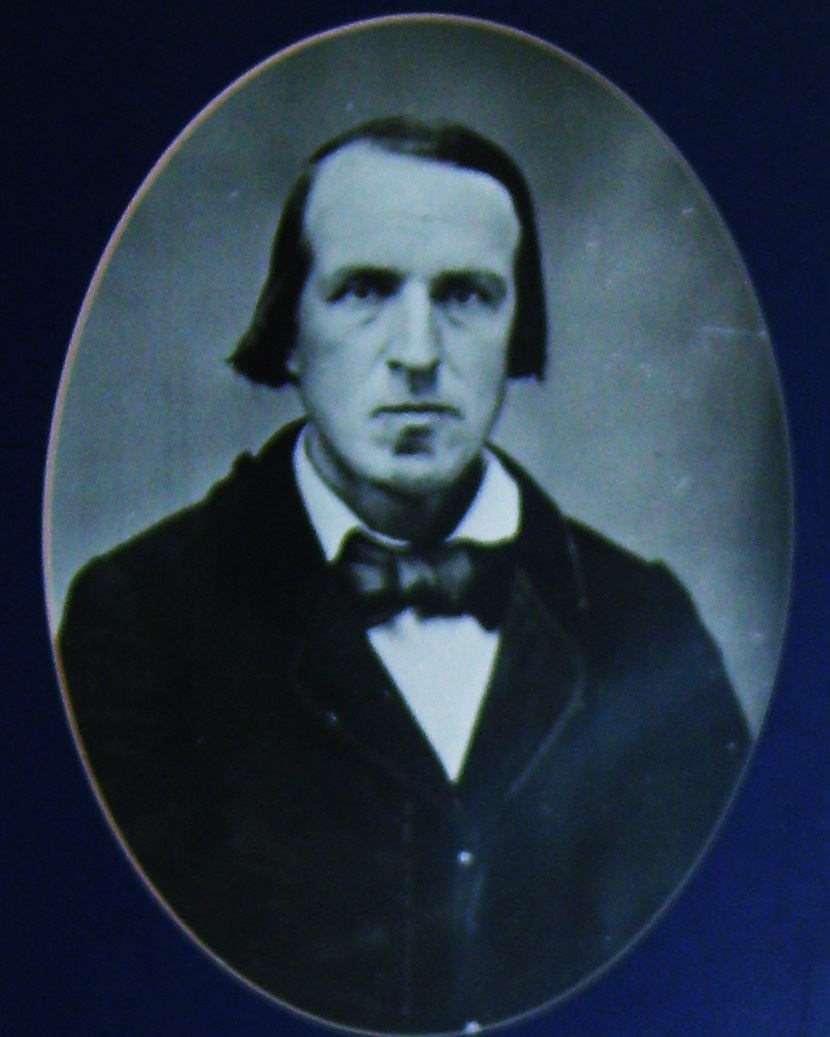
.....My Great great grandfather was Mathew Fitzgerald (in the picture above). Family lore says that he was an abolitionist who willingly reenlisted with the Union in 1864 after returning home for visit his family and 4 children (this picture was taken during that visit). He was adamantly against the "scourge of slavery" and wanted to help end the war that he thought would end slavery. He was a "Lincoln Republican",and died in a confederate prison camp a year after the photo was taken (using an advanced scientific invention....the pinhole camera).
.....Below is a picture of myself and future wife as I prepared to travel from our home in Connecticut to a new home in South Carolina. The article below proposes evidence that supports how poverty persists and how it is eradicated. The article asserts and supplies evidence for the assertion that a better life can be the result of a willingness to pick up stakes and move.  It also cites how certain localities generate more "escapees" from poverty that others. 


.....The article below actually discusses what has been observed to work in eradicating poverty as well as detailing what has not worked. The examination of factors that appear to lead people out of poverty should be, I think, very carefully studied.  This suggests additional studies, that in my mind, should include what is going on in the schools that serve these regions!....I found this article thought provoking:

==============================================================
Consigned to ‘Assistance’ 
From the September 22, 2014, issue of National Review 
By J. D. Vance
     It’s sometimes easy to forget that the Republican party’s proudest moment was the emancipation of the American slave. Indeed, for decades after Lincoln gave his life for the Union, black America voted overwhelmingly Republican. But after FDR brought promises of help to the needy and Goldwater fought the 1964 Civil Rights Act (for what Martin Luther King Jr. called non-racist but still-foolish reasons), the party never recovered its standing with black voters.

     The irony is that as blacks drifted farther from the Republican party, a similar group became its base. Appalachian whites suffer from many of the same social ills as working-class blacks: broken families, substance abuse, poor health, and high poverty. The two groups differ in important ways, but the past 80 years of Appalachian history nonetheless offer lessons about how modern public policy can assist black Americans. Early anti-poverty efforts focused largely on the white population. In an era of “colored” drinking fountains and separate schools, federal aid was as segregated as a southern lunch counter. Social Security excluded agricultural and domestic laborers at a time when most African Americans worked in those professions. Many dark-skinned members of the Greatest Generation never enjoyed the fruits of the GI Bill because of racial discrimination by colleges. It was, as Ira Katznelson argued in an explosive book, a type of affirmative action — for white people.Katznelson’s arguments, though hardly new, have recently gained traction. The idea of paying reparations for slavery has reentered the national debate, and there’s a growing fear, to borrow the words of The Atlantic’s Ta-Nehisi Coates, that “the effects of a social safety net engineered for the aid of some and the hindering of others is [sic] still with us.” To fix the problem, some say, society need merely invert the racist policies of the past. Implement a “domestic Marshall Plan” for black America, says Chicago radio host Salim Muwakkil.
       No one doubts the injustice of Jim Crow. But before foisting a more robust social safety net “engineered for the aid of some” on black Americans, it’s worth assessing whether we missed the mark on the first go-round. And if we failed, we should figure out why.
     In 1965, Lyndon Baines Johnson extended the social safety net to all populations. Yet despite racially neutral intent, a heavy emphasis on rural whites persisted. Two federally chartered organizations — the Depression-era Tennessee Valley Authority (TVA) and Johnson’s Appalachian Regional Commission (ARC) — pumped millions of development dollars into predominantly white rural locales. There was no corollary in black America — no Urban Aid Commission to flood inner cities with aid. Appalachia’s closest economic and cultural cousin is the Mississippi Delta region, a veritable Appalachia for blacks. Yet the Delta Regional Authority, explicitly modeled after the ARC, spent its first dollar in 2000 — 35 years after LBJ made Appalachia the focus of the War on Poverty.
       The aid came not just in the form of direct welfare payments, but also as government jobs. The country-music anthem “Song of the South” tells a familiar tale: “Papa got a job with the TVA; we bought a washing machine and then a Chevrolet.” Thanks to the TVA, thousands of America’s rural white poor obtained high-wage government jobs. And the industrial infrastructure they built still dots the landscape: beautiful lakes birthed by hydroelectric projects and three-lane highways constructed with federal dollars. But there are now precious few jobs in Tennessee valleys and too few drivers on those wide mountain roads. If Papa bought a washing machine and then a Chevrolet, Junior is buying oxy or meth: West Virginia leads the nation in drug-overdose deaths, with Kentucky third and Tennessee eighth.
       The scale of the investment is staggering. From 1965 until 1981, when the federal government began to scrutinize the cash flowing to Appalachia, federal appropriation to the ARC exceeded $1 billion (in today’s dollars) every single year. Even today, Congress sends about $80 million to the ARC; no other regionally focused entity spends more. As late as 2000, Appalachians received more federal money per capita than average, despite their minimal cost of living and the low number of federal employees in the region.
       Twenty years after the ARC’s founding, the New York Times reported that the nation had spent billions on Appalachia with little gain. Its employment gap had persisted and even widened — during the worst of times, the unemployment rate was as much as five percentage points higher than the national average. Economically depressed Central Appalachia lost 26,000 jobs at a time when the U.S. economy added 7 million.
       That was in 1985. Today, the inheritors of Katznelson’s affirmative action for whites occupy the lowest rungs of the socioeconomic ladder. West Virginia, Kentucky, northern Georgia, and South Carolina all nabbed more than their fair share of federal aid, but now they are among the poorest parts of the country. Inequality has grown faster in West Virginia than in any other state. When the New York Times compiled a national quality-of-life ranking, six of the bottom ten counties came from the same small corner of southeastern Kentucky.
       Residents of these states suffer the worst consequences. In many Appalachian counties, inhabitants can expect to live only 67 years, more than a decade less than the average American. In the heavily white Rust Belt enclaves of Indiana and Ohio, children born poor have only a 6 percent chance of becoming wealthy, significantly worse than those from Newark (9.4 percent) or Salt Lake City (11.5 percent).
       Alongside the grim statistics is a spiritual poverty more difficult to measure but easier to see. There’s the high-school teacher who has only once had a class without a pregnant student. The kindergartner who arrives at school in January without a shirt, so embarrassed that he forgot to put one on that he refuses to remove his thin jacket. The teenaged mother who lost track of her child — “She acted like she had lost her car keys,” her teacher later told me. Authorities found the baby with distant relatives more than 600 miles away. Behold the “winners” of FDR’s and LBJ’s brands of affirmative action.
       Not all of these anti-poverty efforts failed. Many whites rode the GI Bill to a great education or assumed mortgages for wealth-building property when most blacks couldn’t. But there are millions of people whose family tradition is destitution: Their forebears were day laborers in the antebellum slave economy, sharecroppers after that, and then miners and steelmen until they couldn’t find jobs at all. The Treasury opened its wallet to change that, building homes, roads, and power plants in the hopes that some could escape the poverty trap. Is it shameful that these efforts were expended primarily in a way that excluded the black population? Certainly. Yet the failure of the effort gives us ample reason to question the wisdom of federally led development efforts no matter the intended beneficiaries. Government cannot create a sustainable economy, no matter how hard it tries. And traditional welfare, while defensible as a way of alleviating immediate deprivation, too often fails to place people on the road to self-sufficiency.
       Yet there is more to glean from our government’s efforts to help Appalachia than a renewed skepticism of government aid. We’ve learned, painfully, that for the multigenerational poor, home might be the worst enemy.  Appalachian loyalty to the land is the stuff of legend, yet the stubbornness of poverty in the region means that those who stay risk being poor forever. When the government paved thousands of miles of roads in Appalachia, it hoped to provide employment for the masses and infrastructure to sustain future economic growth. But the best and most lasting effect of those roads was to give people a faster way out. If we cannot improve the urban ghetto or the mountain hollow — and the evidence suggests we can’t — then the best anti-poverty program is a ticket to somewhere else.
       Migration works not just because some areas suffer; it works because many areas don’t. Take, for instance, two small towns in southeastern Kentucky — Hazard and London. Each suffers from high rates of poverty. Yet Hazard’s children are more than twice as likely to earn a high income — much likelier than children from nearly every major American city. Subtle differences give clues about why. In Hazard, poor people are more likely to live in mixed-income neighborhoods, and intact families are the norm. London children, on the other hand, more often experience broken homes, and the poor live in income-segregated neighborhoods. As the eminent sociologist William Julius Wilson has argued, these segregated neighborhoods send thousands of subtle signals about acceptable (or unacceptable) behavior. Young students in eastern Kentucky sometimes tell their teachers that they hope to “draw” when they grow up. But they’re not talking about a career as an artist; they’re talking about drawing a government check. These kids weren’t programmed like that at birth; they were taught something destructive by their communities. A world where very few work, where many use (or deal) drugs, where more go to prison than to college, changes the expectations of all but a few remarkable souls. And with destructive expectations comes destructive conduct.
       Appalachia teaches us that breaking people out of bad communities has more promise than changing those communities wholesale; that encouraging family stability — or at least not discouraging it through the tax code or needless incarceration — promotes upward mobility more effectively than transfer payments; that educating people for employment somewhere other than the depressed local labor market is a better investment than short-term public works; and that helping kids overcome low expectations creates more hope than giving money to those kids’ parents.
       As a policy agenda, this is a little less ambitious than transforming the mountains from a den of poverty into an engine of economic growth. But if the failures of Appalachia are any guide, a narrower policy agenda might actually serve the poor — white and black alike.

– J. D. Vance, a graduate of Yale Law School and a Marine Corps veteran, is working on a book about the social mobility of the white working class. He can be reached through his Twitter account, @jdvance1. For more on the plight of Appalachia, see “Left Behind,” Kevin D. Williamson, National Review, December 16, 2013. This article originally appeared in the September 22, 2014 issue of National Review.

Saturday, September 20, 2014

The Government and the Family


    The unfortunate news is that big government-business aggressively pursue policies that discourage family formation, hamper families that do exist and encourage those who are making poor choices to obtain assistance from a distant and uncaring government.  These are not policies intentionally aimed at harming families and many actually think they are helping the struggling "poor families".   Some facts indicate that the policies of federal aid to families do fail to preserve the family and in a bizarre outcome the data has for 50 years consistently shown that the government aid is associated with the weakening and eradication of family ties.  The results stand in stark factual contrast to the stated intentions.
    The FACTS are a stunning.  Over 50 years ago the 1965 confidential "Moynihan Report" labeled "For Official Use Only" was given to President Johnson.  The report detailed the FACTS about how government programs assisting the poor were associated with the break up of families (and all the associated problems).  Even though that report was assembled based on valid information by a prominent member of the democratic party it was  rejected on grounds that it was "racist" in depicting that the impact was particularly evident on "negro families".  Since that time it has been well established that government assistance, like a poison pill, has been associated with degraded families of every race and creed.  The reports and predictions in that report (of accelerating decline of the family with more such assistance) have come true.   Similar findings have been repeatedly replicated in followup studies through the years.  
     The conclusion of the report's democratic author was that full employment could maintain or even reverse the decline of the family and suggested that employment (a new goal of the government)  would be better than "transfer payments" in bringing justice and equity.   This goal was ignored and never implemented as a policy.  Instead 50 years of increasing persistent welfare spending we have three times the rate of single family homes as we did in 1965 (with the associated problems of violence and crime).  The goal of full employment was NEVER pursued BUT government efforts to "help" the family have been relentlessly pursued by using multiple forms of welfare assistance.  The response of 1965 was  "more money to help the family" and increasing amounts of money was provided for the next 50 years.  Meanwhile the suggested support policy for the family, which was "full employment" (rather than "handouts"), has nurtured the highest labor non-participation rates in history.
      A tale repeatedly for over 2000 years is called the "prodigal son" (Luke 15:11-32).  In that story a son takes the wealth he would have inherited from his father and lives a life that squanders the entire sum.  Finding himself in a job he did not like, being paid less than he wanted and knowing that life was better at home (where his family continued to live prudently) the son decided to return home and REFORM his life.  The son thought he would even be willing to WORK for his father as a servant.  Today the government would step in and make sure that the son did not have to go home and allow him to continue a life with an imprudence.  The son blaming others for his plight, would continue a life unreformed and the government would step in to provide him with cell phone, rent assistance and/or EBT cash.  There would be no return to the family and no reform of his life.  Unfortunately there is still a personal outcome not addressed by the son accepting the poison pill rather than reform.
     What suppresses full employment and could therefore hurt the family? The single overwhelmingly largest employer in the nation is small businesses.  Small businesses are growing (as a portion of the entire labor pool) in spite of oppression according to Government Labor Statistics).  Large businesses are busy taking capital overseas to protect it from seizure in the US.  Small businesses have no choice but to remain.   Government is experienced by owners of small businesses as imposing heavy, complicated tax structures with a tax enforcement agency that can arbitrarily seize property (without civil recourse or neutral review).  The oppression of small companies can also be experienced with OSHA and EPA government agencies who own small businesses and can be due to political affiliation that is "out of office".  The "Affordable Care Act", as an for example,  places monetary and regulatory burdens on the small companies and start ups while huge companies (like Walmart - a huge donor to political races) get waivers.  Meanwhile large companies protect capital from seizure by keeping much of the capital out of the country (something the small company based in the US can not due) including large political donors like GE and APPLE.
     Eventually the goose that lays the golden eggs will be trapped, choked and consumed.  The idea that people can work, own and run their own business can be extinguished by regulation, taxes, policy and force of law. 
     
     What if we have a dysfunctional government run by a big government party NEEDS a dependent class to be elected?  That dysfunctional government would be tempted to create policies (if you had faith in big government-business) that weaken the family while claiming to care about the family.  The government could unintentionally destroy opportunities for employment that supports families.  Political parties could harm families with support for individuals who need much more than material assistance.  It may be that big government do not need or want strong families.  It is possible that government, in seeking dependency and legitimacy, seeks increased dependency.

Wednesday, September 17, 2014

Universal Health Care in a Pluralistic Society?


     Some might think that in a country of immigrants with widely variant values that the government can coerce everyone (forcibly if needed) into a "one size fits all" health care system.  How unfortunate because this assumption is most certainly not true and government programs will never make it so (though it may pretend to in order to tax workers and enrich cronies).  There is no agreement and will likely never be agreement on what constitutes "health care." Disparate opinions about what constitutes genuine health care are not, due to deeply held convictions, resolvable (even if the big government faithful might think so does not make it so).  An example can be found in the need some have for a "sex change operation" which is deemed an approved "health care" for tax supported plans but "proton therapy for brain cancer" is not approved "health care" (real examples).  Even in a small country with a rather homogeneous population there may be agreement (there is not even such agreement in Switzerland where the wealthy go to private sources for health care - universal is for those who can not or do not want to pay for the private available care) but in larger countries where people with similar values may pool funds the universal approach is not only inefficient it is, in fact, unworkable.  The wealthy (you can be assured) will opt out as they do in every country that offers "universal care".  Only those who wish to pool with others having similar values will be "mandated" and "coerced" into government dictated care programs.
     The United States is opting for the "slow choking" of values oriented pooled people who share expenses through insurance (like the "Little Sisters of the Poor" etc.).  Lobbyists who wrote the bill that was admittedly not read by the lawmakers who passed the bill (passed the midnight before the arrival of a "no vote" from Massachusetts) celebrated the "accomplishment".  The lobbyist goal was to provide larger pools of payees to insurance companies and so expand market penetration to increase corporate income and that goal was fulfilled.  The wealthy remained unaffected (and need no insurance).  The insurance companies were delighted with the new "mandatory purchases" required by law (if only car companies could have mandated purchases or broccoli growers too!)  The big government party was happy with increased dependency.  The resourceful and hardworking people who pooled resources with others having similar values are suffering the most.  It only makes sense to those who believe in the big government-business that imposing a healthcare system for all would help establish a permanent big government party that will "promise" ever increasing benefits (even if not true).  The bonus is that the twin head to government, large insurance companies (in this case) are delighted to provide donations to the big government party to help them maintain positions of power. This makes both heads of the coercive "health care system" happy.
     Health Insurance is a highly charged topic because personal decisions and the highest of stakes (life itself) are at the core of the debate. A definition of "health care" is difficult (if not impossible) to define in common with others who may have different values, beliefs and principles in our pluralistic society.  Given the many differences in understanding and the widely variant private behavior this is a subject with strong emotional attachment.  Life altering events can be totally unpredictable (like being hit by a meteor on the way to work) or the consequence of some long term habit that eventually robs a person of an ability to breath (like smoking).  Many life ending events are a mixture of both chance and behavior that leads to a variety of outcomes which confound our sense of fairness and justice.  In the end it is personal behavior and spiritual formation that influence how we face this issue of  "health insurance" and there is no topic that could be more personal or controversial.
     Some see "Health Insurance" is a financial product that pays for medical costs when our ability to live as fully as we wish is diminished.  A diminished life may mean less than unlimited access to contraception, abortion of the unborn, sterilization, breast enhancement, sex change, sexually arousing drugs, removal of "skin flicks", teeth straightening or the need for cartilage repair due to an sport injury.  "Health Insurance" can be seen by others as resources reserved only for the purpose of extending or saving life.  The very definition of "health care" is a personal issue founded upon widely differing views of our human condition.  It is hardly surprising that a national consensus is difficult with such widely disparate views of what "Health Insurance" should do.  The lack of common vision about the definition of health care is especially true in a country that has a collection of persons from a wide variety of backgrounds, understandings and vision for living.
     Chance plays a role in life that can be unsettling for those who prefer order, predictability and a humane sense of justice.  Examples of how chance can work are innumerable and perplexing.  One (true) example is one of the richest persons in the world with virtually unlimited financial resources met an untimely death despite the best care money could buy.  In another example (also true) a child that has had cancer removed by surgery and is then scheduled for chemo-therapy by the best medical advice available.  The parents decline the therapy despite the dire warnings of the medical experts.  That child still survives, fully functional, thirty years later.  Greater resources can and often seem to extend the lives of unfortunate victims (or even save them) but the resources may also fail and the irony is that sometimes the resources may hasten the end of life as well.  Chance is difficult to deal with because it reveals in stark terms how insufficient our medical science is and how fragile our life is.  Can a board of informed, educated and detached experts make better decisions about medical expenditures than individuals (or families) using resources personally available to those facing the end of life?  Who can truly know the "right" decision?  It is hard to fathom that pooled funds can satisfy the expansive variety of opinions people face with the end of  life event arrives (as it always does).  Chance in the case of health care is not predictable at the individual level where the values most personally dictate individual response.
    The person who eats a healthy diet and remains physically active is much more likely, according to aggregate data, to live the fullest possible life.  Despite the well known links of lung cancer to smoking, alcohol to liver damage,  fatty foods to heart problems, sedentary life to physical incapacity people choose freely to smoke, drink alcohol, eat fatty foods and fail to exercise regularly.  Others refrain from pleasures of smoking, drinking alcohol, eating deserts and spend hours each week trying to remain physically capable rather than enjoying multiple forms of entertainment.  Should the person who has sacrificed and done without the pleasures that others have enjoyed pay the same premiums as the person who living with the pleasures of smoke, drink, delightful dessert or couch entertainment?  Does a personal sense of responsibility, self discipline and sacrifice also play a role in the cost of "Health Care"?  Is it the job of the government to make sure that the person who lives healthy pay the same price for health care as the person who elects not to live healthy?
      The spiritual formation required to rationally deal with our health and frailty is paramount and trumps both chance or discipline. If a person fears the final moment of a finite life then no amount of resources can go untapped to save them from eternal extinction.  All concern for the financial condition of those left behind can mean little or nothing compared to the preservation of self at all costs.  The devout and religious person who sees earthly life as a transient experience thinks of the comfort of those who remain (emotional and financial). The person dedicated to more than an earthly life knows that facing death with dignity can assist those who are closest and knows that opportunities can be provided with resources not used to extraordinarily extend life.  A nurse shared (true story) a discomfort she had when a patient, after visiting with family, elected to have enhanced oxygen supply removed causing a quickened death.  That nurse then realized that the person, of sincere faith, was ready for the end of earthly dwelling.  In the Christian faith trials can be viewed as privilege (James 1:2-12) and life can end with the comforting fact that "Happy the man who stands firm when trials come. He has proved himself and will win the prize of life."

   The expansion of the federal government into the most personal decisions families and individuals make is more in line with modern totalitarian prone societies.  A good treatment of the history of administrative law under kings and in our newer democracy is treated very well in

Full Employment and Wealth


      The average worker in a country with no minimum wage, according to common assumption, should have lower wages because the "floor" of the national pay scale is non-existent.  These workers would then be ruthlessly exploited and oppressed by the rich people and evil companies that would prey on them and exploit them.  The expectation of the would be that workers would refuse to work (high unemployment or non-participation) and those that did work would be paid lower average wages.  According to these common assumptions a country with no minimum wage would have depressed wages and higher non-participation and unemployment.  
       Is anyone surprised by the FACT that a country with NO GOVERNMENT MANDATED MINIMUM WAGE has the highest employment rate in the world AND also pays much higher than average salaries?  Switzerland (a nation with no minimum wage) has full employment AND pays a higher average wage than most other developed countries!   Such FACTS contradict the expectations of those who believe in a society that needs big government to best help workers. 
      Why, in fact, is the "big government is best" assumption opposite of reality?  Could it be that "No government dictated minimum wage" encourages employers to hire workers into entry level positions earlier?  The experience gained by a worker early in a career would result in the production of more goods and services over a lifetime.  Could it possibly be that the relationship between with employer and employee is actually clarified with no government mandated minimum wage?  The employee would be grateful to the employer for the pay they get and the employee would want to help the company succeed!  The employer would want to retain the experience and skills developed and increase pay accordingly.  The clear and better relationship could mean a better wage.  The employer would work to nurture a mutual relationship and so provide better wages rather than one mediated by a distant coercive institution (big government) that draws the loyalty of that worker away from the employer.   When there is no government "thug" to change the nature of the mutually beneficial relationship great things can and DO happen!  The higher wages would be the result of such a society along with greater participation and lower unemployment.  Higher wages would then bring more wealth!   The cycle would continue.
     The assumption that minimum wage law increases average wages springs from a lack of knowledge about the principles which drive economic life.  The keystone of wealth is a contributing and productive people.  The more people who are contributing talents and energies to the pool of goods and services then the wealthier everyone in that society is.  This greater pool of wealth can then be distributed (via individual transactions) with ever increasing generosity because there are more goods and services to exchange!
    Full employment is the secret to higher wages and greater wealth for every society in every type of government.  When the unemployment rate is low nothing could be better for the worker!  That worker can choose who to work for and how much they are willing to accept.  Switzerland, for example, has a greater pool of goods and services even though it overwhelmingly rejected a "minimum wage law" (which reveals an underlying attitude that rejects government coerced mandates).  This greater pool of goods and services takes years to build and flow. People develop skills from the many years of experience working in an economy that encourages participation from the earliest possible start of an entry level worker.  The United States is growing more starkly in contrast to type of economy that encourages full employment and greater national wealth.  The policies of our big government party will likely grow unemployment for years to come.
    The focus on full employment is one important key to having high wages and wealth.  The facts clearly display this.  Recent tax increases, imposed wages, regulation and government coercion clearly provide evidence that non-participation in the labor force increases and human potential is suppressed (causing an "ever widening gap" between the  rich and poor".)

   What if we have a dysfunctional government run NEEDS a dependent class to be elected?  That dysfunctional government would be tempted to create policies (if you had faith in big government-business) that weaken individual contribution and increase the need for government.  This would secure the loyalty of the individual to the government.

     The very reason for interest in minimum wage is votes.  Now that health care is taking ever greater proportions of the economy, high unemployment (hidden by "non-participation") and inflationary behavior of prices (hidden by changing the weighting of calculations) the electoral consequences appear to be dire for the big government party.  What will the big government do?  That same party that had a super-majority in the Senate, complete control of the House of Representatives and a president for two years and NEVER acted on minimum wage.  They knew (and it is well known) that raising the minimum wage would result in further slow down, less opportunity for entry level participants and less younger entry level workers.  While in control they did what they knew had to be done.  They left the minimum wage alone and did nothing!
      So now things change and the big government party needs to win an election!  So now that they are NOT in control they DEMAND that minimum wage be raised!  It is a win-win for the big government party that wants to get votes.  If the small government types deny the minimum wage they can scream "Vote us in to help make wages "fair" (whatever "fair" means!) and stop those greedy evil money grabbing smaller government types!  If the minimum wage law passes unemployment goes up and the impoverished class increase in size.  Now one can blame the same small government types, those evil companies and the greedy rich people.  This duplicitous technique is well known among demagogues and proponents of big government.  In fact duplicity is the key to winning elections and it has the added benefit of enlarging the impoverished dependent class who will vote for you.  Any one remember "You can keep your policy?" (I couldn't!)
     The problem, of course, is that selective prosecution, duplicity (making promises you know will not be true), demonizing and cronyism work.  The big government-business party knows that.  They are just getting ready to win again.

       The fabulous video clip below actually touches on the unintentional impact of "minimum wage".  The person addresses the unintended effect when he talks about "There are no jobs!  The minimum wage is for what?!"  His exasperation is as clear as mine in the segment.  We are locking out so many healthy, productive and good people who could prove themselves if given a chance at a wage "so low" that any business person would want to give them a chance!


Read more questions addressed below:
  The Government is never big enough.  Make it bigger!
  Does our big government truly help families?
  Perpetuating Poverty with the Wrong Solution
  Is our big government a wonderful healthcare provider?
  Why does healthcare matter to those who want freedom?
  Does forcing employers to pay a certain minimum wage help?
  How a government truly can enrich everyone! 

Minimum Wage War?


     Well intended efforts to help the downtrodden, reduce government dependence, mitigate poverty and bring us a more perfect world have what seems to be an obvious solution:   Raise the minimum wage!   The simple view is that an increase in minimum wage encourages those seeking employment, assists those who are earning too little and therefore will raise average income among the least rewarded of all employees (the low skilled entry level worker).  The downtrodden then believe their lot has been improved by using government to force evil companies and greedy rich people to pay a higher wage.  Such are the webs of those who have an unquestioning faith in in big government-business as a savior of human kind.  If only it were true.
     There is comfort in such solutions because emotion rules the argument rather than reason. The emotionally driven argument counts intentions more than results.  It also assumes that anyone who thinks differently must have "wrong" intentions.  When the poor end up worse off there will always be, of course, the  "evil companies" and "greedy rich people" here to blame again.   Totalitarian governments have found blaming to always be easier than reasoning and takes much less time as well (Orwell hit on this point in his famous work).  Why examine what actually happens when we can all agree quickly who the evil doers are?  Even if these "evil intentions" are falsely assigned we can still all agree they are evil!

     One could look to a nation with the lowest unemployment rate in the world just to see what minimum wage law might exist and compare it to the minimum wage law of our country.   A nation with the consistently (year over year) lowest unemployment rate in the world (between 1.8% to 3% over the last 5 years) also is a nation with no minimum wage law!  In fact a minimum wage law put  to referendum in May of 2014 was overwhelmingly rejected by 76% of the voters in that country.  Could this mean that there is a large underpaid working class of impoverished persons in this country?  In fact the answer to this question is "no".  Instead, surprisingly, we find that the country of Switzerland is among the richest in the world with one of the highest average incomes and lowest of poverty rates.  Facts like these fails to resonate with the emotional argument so it must (and surely will) be dismissed for all sorts of creative reasons.  Worst of all it could mean the government (like ours) makes things worse for the poor despite the intentions and that truly flies in the face of the big government-business faith!
     One might look at the impact of the minimum wage on the workforce in our nation and for the patterns found between states (there are different minimum wages from state to state).  What proportion of workers actually make the minimum wage and would be impacted?  If we pass a law that mandates a higher minimum wage what impact does it have when comparing states?  According to U.S. Labor Bureau statistics those making minimum wage are less than 5% of the working population and most of these positions employ teenagers and entry level workers.  In states raising the pay of these workers by force of law (according to the U.S. Labor Bureau statistics from 1990-2013) there were sustained increases in teenage unemployment and less entry level positions to those seeking first time employment.  The people meant to be helped are shut out of any employment at all.  The long term impact of shutting the door on these entry level workers could be contributing to the growing non-participation rate by able bodied individuals who have given up on work altogether (and are not even counted as unemployed by the government).    So forcibly raising minimum wage (by law in different states) reduces lifetime earnings of workers and denies entry level positions to those who desperately desire them.  None of this reality matters to those who believe that "laws always help" because, even if predictable as an outcome, those who consider themselves as trying to "help" will blame the people and companies who decide in marginal situations "not to hire" as "greedy and wrong" (even if those blaming appear not to be hiring themselves.)
     Finally there is the relationship between the employer and the employee that is altered.  The employee earning minimum wage has an allegiance to the government that he thinks is providing the minimum wage and is grateful to the government for "saving him from lower wages" (even if it is the employing firm who is actually supplying the wage!)   If the worker were more focused on being grateful and working hard for the company then greater company earnings could result.  The worker efforts and positive attitude would help the bottom line of the company and the future of that worker.  When a government steps in to dictate compensation the loyalty and effort which might be mutually experienced by company and employee is lost.  The government is like a "thug" in your "corner" helping you get the most you can for yourself.  This reliance on your "thug friend" substitutes for working to make your company more successful so that you can be a part of the success.  The relationship of mutual caring is now lost.  The mere presence of the thug empowers a negative attitude and hinders the possible advancement of that employee (in both attitude and compensation).
       There are some who intuitively realize the principles at work (as depicted in the video below).  They recognize that economic activity is, in fact, actually suppressed by big government.  Who benefits from the suppression of economic activity?  The poor do not benefit form such suppression.  Laws passed may be meant to help but they fail to do so time and time and time again.  In the tradition of Frederick Douglass this video clip appears to show some of the awakened (and make an important point about minimum wage):

\

     One huge benefit to the minimum wage worker would most certainly be to allow and ease the starting one's own business.  If individuals could start a business as easily as getting a job there would be an increase and upward pressure on wages (because these workers are not available for hire!)  Unfortunately the burden of regulations, laws, codes and complicated tax structures penalize AND deter the formation of small businesses.  The small businesses have no lobbyists or built in political clout that protects them.
     
        The problem with a government mandate justified by intention has two wrong folds.  First is the wrong idea that those who want a higher "minimum wage" naturally define those who "truly" care (while those who disagree "truly do not care"?)   The fact that data does provide evidence that minimum wage laws can reduce opportunities and increase suffering for the poorest and most vulnerable (unskilled workers) is exactly the opposite of intended consequences.   The tragic result caused by imposed increases in minimum wage is  unskilled unemployment increase, government dependence increase, average income decline and the poorest of all workers (the unskilled youthful employee) is hurt over a lifetime by a delayed entry into the workforce.  
       The young worker is also strategically wounded by an adversarial relationship with the employer, tactically crippled with increased unemployment now (forcing dependence on government) and then must carry long periods of unemployment on the life long resume.   Those who wanted the easy "solution" of forcibly increasing the minimum wage will fall back on "we meant to help the downtrodden" and "the one's causing the decrease opportunities are the  greedy rich and the evil companies."  The paradox, of course, is that the greedy rich people are the one's who employ the workers and PAY them.  A government that claims to be giving the worker a minimum wage is merely a thug forcing the employer to pay the wage and this is not lost on the worker.   So the conscience is salved by "intent" even if the results guarantee another round of blame and decline in opportunity rather than a much needed round of opportunity and enrichment.
      If only we could get past the intentions.


Followers

Blog Archive